In the early days of a company, decisions move quickly because the founder carries most of the context. Priorities are clear. Communication is simple. The team is small enough that alignment happens without much effort.
As a company grows, that stops working.
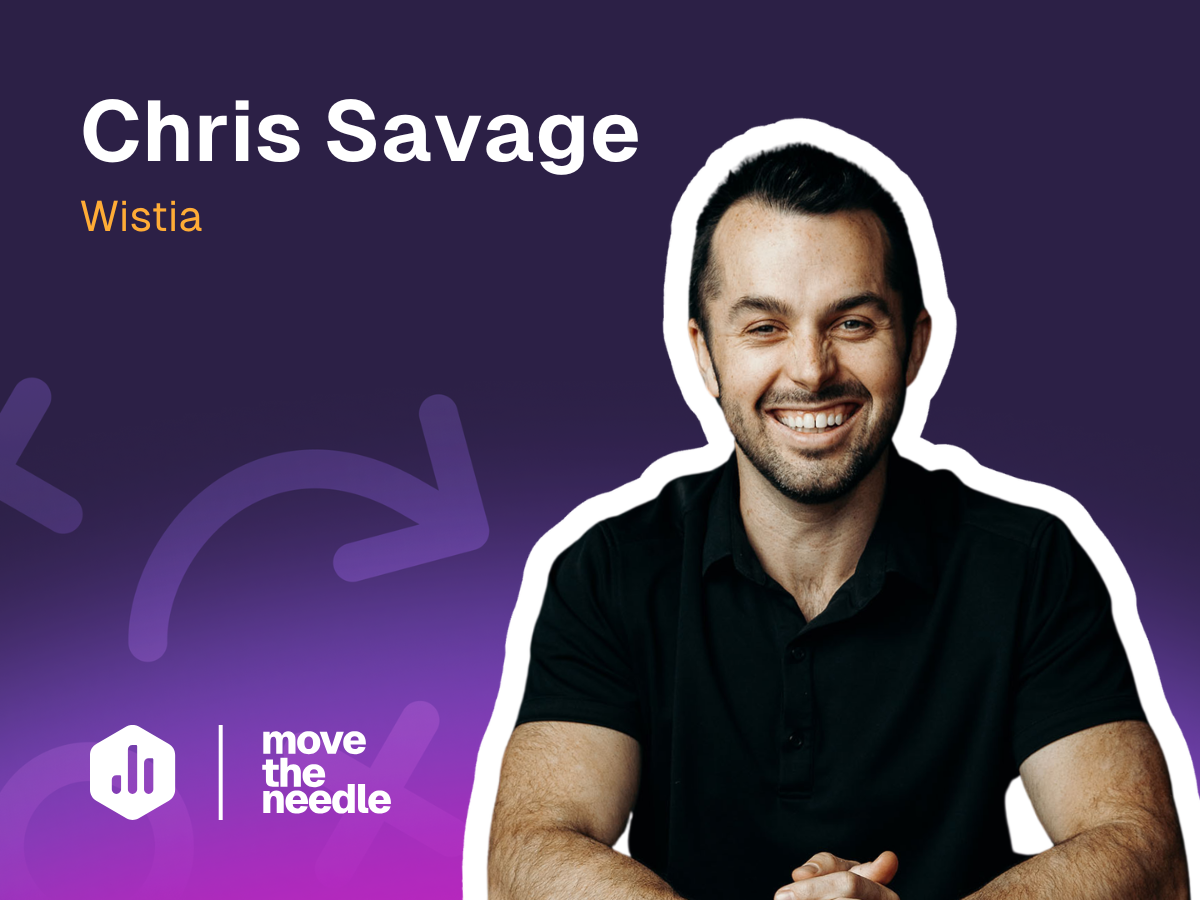
More customers introduce new use cases. More products create more tradeoffs. More teams mean more interpretation of what matters most.In a recent episode of Move the Needle, Chris Savage, CEO and Co-Founder of Wistia, described how his company moved from founder-led intuition to a more deliberate operating structure.
Watch the full episode
The Scaling Inflection Point
Wistia was growing when they made their first major strategic shift. Revenue was healthy. Customers were using the product across marketing, sales, and training.
That variety created tension inside the company.
Chris asked a question that many leaders eventually face:
“How do you build something that works for all of these use cases at the same time?”
When a product serves too many priorities, roadmap decisions become harder. Focus weakens.
The shift came from narrowing.
“Which customers do you think are best?”
They chose marketers as their primary audience and made that decision explicit. That clarity changed how product tradeoffs were made and how messaging was written.
Growth accelerated after that move.
Making Strategic Bets Without Early Proof
Several years later, Wistia made a larger bet. They expanded from hosting into a broader video marketing platform. That required building new capabilities and committing to a long-term direction.
Early traction did not make the decision look obviously correct. Only a few of the planned initiatives had launched, and results were modest.
Chris questioned whether they were off track.
Instead of relying on short-term revenue as the main indicator, he looked at customer reaction.
“The real question was like, are we getting feedback on this stuff? Because if nobody cares, they don’t tell you anything. But if they tell you they hate it, you’re onto something.”
Two months after launch, a product can look underwhelming. Nine months later, it may start to gain momentum. Eighteen months later, it can become central to the business.
Strategic patience depends on watching the right signals. Engagement and feedback often matter more than early revenue curves.
Installing an Operating Structure
As Wistia grew, instinct was no longer enough to keep teams aligned. They needed a shared structure for planning and evaluation.
That structure included clear company-level objectives tied to team-level OKRs. Every major initiative was modeled against three scenarios: base, target, and stretch. That approach clarified what “good” looked like and how performance would be judged.
If you are designing an OKR system, this guide outlines how to structure and track objectives in real time:
https://databox.com/okr-blueprint
Wistia also changed its planning cadence. Quarterly planning began to feel heavy and repetitive. They shifted to planning three times per year, which gave teams more room to execute while still maintaining accountability.
“Everyone knows why you’re doing what you’re doing.”
They also grade performance openly. Stretch goals earn an A, target goals a B, and base goals a C. Public evaluation reduces ambiguity and keeps expectations visible.
Transparency requires leadership discipline. When something is off track, it is discussed directly. When something works, it is acknowledged.
The Founder Bottleneck
As execution speeds up, leadership bandwidth becomes a limiting factor.
“You just become the bottleneck.”
AI has increased development speed and reduced the size of teams required to ship meaningful work. Two people can now build what once required seven. That compresses timelines and raises expectations.
One person cannot process every decision in that environment.
Visibility becomes essential.
An executive dashboard should make it easy to see revenue trends, pipeline health, product adoption, retention patterns, and progress toward objectives in one place.
When performance data is centralized, ownership spreads. Teams can act without waiting for constant approval.
A strong SaaS executive dashboard should surface, at a glance:
- Revenue growth and forecast
- Pipeline health
- Product adoption
- Retention trends
- Progress against key objectives
If you are building this type of visibility, these SaaS growth dashboard examples show how high-performing teams structure it: https://databox.com/dashboard-examples/saas-growth
What a Scalable Operating System Includes
IFor SaaS executives navigating similar complexity, Wistia’s approach suggests a practical checklist:
- A clearly defined ICP.
- A method for evaluating strategic bets beyond short-term revenue.
- A modeling framework (base, target, stretch).
- A consistent planning cadence.
- Transparent performance reviews.
- Distributed ownership aligned to stage.
- Leadership that models clarity and accountability.
These elements mirror what we teach in the Predictable Scale course.
Predictable Scale is built around the idea that sustainable growth comes from installing repeatable systems across strategy, planning, execution, and measurement. It formalizes the same shift Chris described in this conversation: moving from instinct-driven decisions to shared structure.
If you’re working through similar growing pains, Predictable Scale goes deeper into how to design these systems in a way that fits your stage.
Check it out here ?https://databox.com/predictable-scale
Key Takeaways for SaaS Leaders
If you’re scaling a mid-size SaaS company, here are the lessons:
1. Focus compounds.
Trying to serve everyone slows product velocity.
2. Feedback is traction.
Silence is worse than criticism.
3. Planning should reduce friction, not increase it.
If quarterly planning feels heavy, revisit cadence.
4. Transparency accelerates alignment.
Public scorecards reduce ambiguity.
5. AI increases clock speed.
Your operating system must evolve accordingly.
6. Founders must architect systems, not just strategy.
Instinct launches companies.
Systems scale them.
To sum up, the most dangerous scaling trap isn’t a bad strategy, but clinging to instinct when complexity demands structure.
Drive predictable growth
Join “Move The Needle” and get issues like this delivered to your inbox. Each issue we share tactics, strategies and ideas from B2B leaders on how to drive consistent, predictable growth at your company.