TL;DR
- Salesforce MCP is a real, working advancement that lets Claude, ChatGPT, and other AI agents query your CRM directly. The Salesforce-to-AI integration problem is genuinely solved as of late April 2026.
- CRM-only AI context recreates the data silo in AI form. A VP of Sales asking about pipeline coverage needs Salesforce data, ad spend from Google Ads, and email engagement from HubSpot in the same answer, and Salesforce MCP alone cannot deliver that.
- Evaluating Salesforce Einstein + MCP against a multi-source intelligence layer on data scope, agent compatibility, and governance reveals a gap that no CRM-native configuration can close.
- Three testable conditions determine whether Salesforce MCP alone is sufficient: whether your revenue decisions depend on more than one data source, whether multiple AI agents in your stack must return the same answer to the same question, and whether governance requires a single audit trail across sources.
- Databox is the intelligence layer that sits beneath every agent in your stack: one Metric Library where “pipeline coverage” means the same thing across CRM, marketing, and ad data, connecting 130+ sources so your AI reasons about your whole business, not just your CRM.
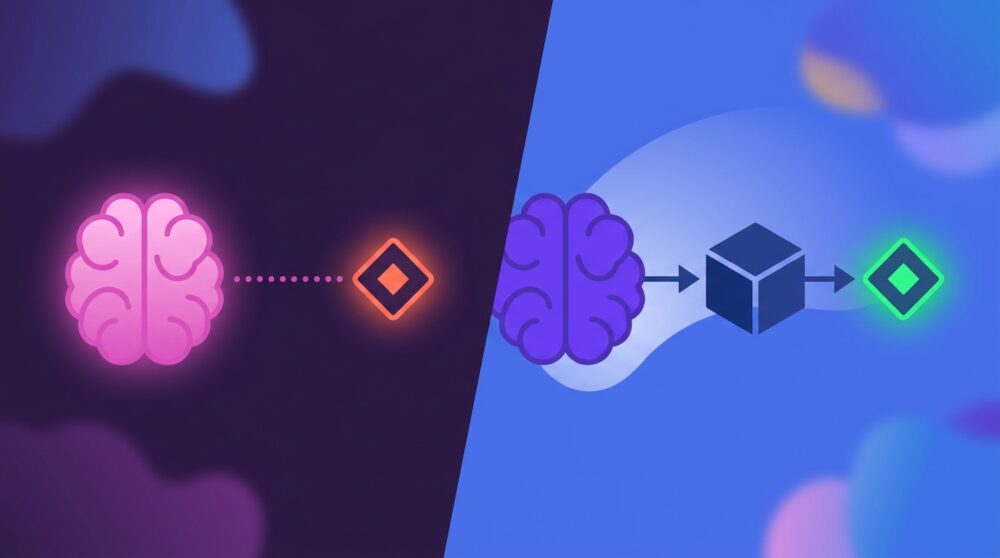
Connecting Salesforce to Claude via MCP is the advancement the SERP says it is. You authenticate once, your AI agent queries live CRM data, and you stop copying deal records into chat windows. For a Revenue Operations Manager who spent Q1 begging an admin to export pipeline snapshots, that matters.
But the moment your AI agent can finally talk to Salesforce, a harder question surfaces: is Salesforce data alone enough to answer the questions that pipeline coverage and revenue attainment actually depend on? For any revenue leader whose decisions span more than one system, the answer is no. The gap is not a configuration problem. It is an architecture problem. You solved the integration silo. You built a new intelligence silo in its place.
In Databox’s AI in Analytics research, 9% of respondents had a unified data layer their AI could query. The other 91% were asking AI agents to reason about a business the agents could only partially see.
Salesforce MCP Is a Genuine Advancement. It Immediately Surfaces a Structural Limitation CRM Data Alone Cannot Fix
What Salesforce MCP actually enables
Model Context Protocol (MCP) is an open standard, originally developed by Anthropic, that lets AI agents connect to external data sources through authenticated, structured server endpoints. Instead of pasting CSV exports into a prompt, your AI agent connects to a live data layer and queries it directly.
Salesforce shipped hosted MCP servers as generally available in late April 2026. The practical result: a VP of Sales can open Claude or ChatGPT, connect to their Salesforce org, and ask questions like “Show me all open opportunities over $50K in Stage 3 or later” without an analyst, a report builder, or an export. The AI agent queries live Salesforce objects (Opportunities, Accounts, Contacts, Leads) and returns structured answers grounded in real CRM data.
This is genuinely useful. Deal stage checks that used to require navigating Salesforce reports happen in natural language. Account lookups that interrupted pipeline reviews now happen mid-conversation. For CRM-specific queries, the friction dropped to near zero.
Where the excitement runs ahead of the architecture
The problem is not what Salesforce MCP does, but what revenue decisions actually require.
A Revenue Operations Manager reviewing pipeline coverage does not need “all open opportunities over $50K.” They need that answer combined with which of those accounts have declining email engagement over the past 30 days, which are seeing rising cost-per-lead in paid campaigns, and which have support tickets flagged in the last quarter. Pipeline coverage is a cross-source metric. It lives in Salesforce, Google Ads, HubSpot, Intercom, and your ad platform simultaneously.
When you connect Salesforce to Claude via MCP, your AI agent becomes fluent in CRM data, reasoning about deals, stages, owners, close dates, and forecast categories with real depth. But ask it “Which accounts have high pipeline value but declining email engagement and rising ad CPL?” and the answer degrades. Not because the AI is weak, but because it can only see one source.
Consider what that looks like in practice: a Director of Sales Enablement preparing for a quarterly business review needs to identify at-risk deals. In Salesforce, the deals look healthy: Stage 4, expected close date within the quarter, champion identified. Attributed ad spend at those accounts has tripled over the past quarter. HubSpot shows email open rates from buying committee members dropped from 42% to 11% over six weeks. The Salesforce-only AI agent returns no red flags. The cross-source view returns risk. The QBR goes differently depending on which agent the Director trusts.
The silo you just rebuilt
Every revenue team spent the last decade trying to break data silos between CRM, marketing automation, ad platforms, and support tools. Salesforce MCP solves the integration silo: the question of how to get data out of Salesforce and into an AI context. But it recreates the intelligence silo: your AI agent now has deep access to one source and zero access to everything else.
For a VP of Sales whose pipeline coverage ratio depends on marketing-sourced pipeline quality, ad spend efficiency, and CRM-reported deal values, the Salesforce-only AI agent is an analyst who can only see one screen. The connection is sophisticated. The view is incomplete.
Evaluating Salesforce Einstein + MCP Against a Multi-Source Intelligence Layer on Data Scope, Agent Compatibility, and Governance
Evaluation dimension 1: data scope and coherence
Salesforce Einstein + native MCP delivers deep access to Salesforce objects. You can query Opportunities, Accounts, Cases, custom objects, and anything modeled in your org. For questions that live entirely within CRM (“What is the total value of opportunities in Stage 5 owned by the East team?”), the answer is fast, accurate, and grounded.
The obvious next move is to bolt on more MCP connectors. Salesforce MCP for CRM. HubSpot MCP for marketing. Google Ads MCP for spend. Intercom MCP for support. On paper, the AI now sees everything.
It does not. It sees four schemas. Salesforce calls a record a Lead. HubSpot calls the same person a Contact. Google Ads calls them a Conversion. Intercom calls them a User. Individual MCP connectors do not perform joins across systems, which means the AI has to pull raw records from each source and stitch them together itself. That is data engineering work, and language models are bad at it. When Claude tries to answer “which Stage 4 accounts have declining engagement and rising CPL,” it does not know that the Salesforce Lead, the HubSpot Contact, and the Google Ads Conversion refer to the same buyer. It guesses. Alex Pavlinek walks through why more connectors compound the problem instead of solving it.
A semantic layer resolves that. In Databox, “pipeline coverage,” “qualified lead,” and “customer acquisition cost” are defined once in the Metric Library, mapped to the underlying fields in every source they touch. The joins live where the metrics live, not in the AI’s head. Claude does not have to guess whether Salesforce’s Lead and HubSpot’s Contact refer to the same person, because that mapping already sits in the layer the AI reads. Adding source connectors without a semantic layer underneath adds more vocabularies the AI has to reconcile on the fly. Adding the semantic layer removes the guessing.
The gap: Salesforce MCP makes CRM data queryable. More MCP connectors make more sources queryable, each in its own vocabulary. A multi-source intelligence layer with a semantic layer underneath makes cross-source questions answerable, because the vocabularies have already been reconciled where the metrics live. For a Head of Marketing Operations who owns marketing-sourced pipeline, the first gives one screen. The second gives a stack of screens the AI cannot stitch together. The third gives a frame the AI can actually reason from.
"Currently, having data spread across various systems such as Salesforce, HubSpot, Orum and other technologies we leverage, combining this data is the greatest challenge."
Evaluation dimension 2: agent compatibility
Salesforce’s Agentforce platform uses MCP internally to let its own agents access Salesforce data and perform actions within the Salesforce ecosystem. That is a meaningful capability for Salesforce-native workflows: case routing, lead assignment, and internal automation.
Agentforce agents are Salesforce agents. When a Revenue Operations Manager wants Claude to analyze pipeline, ChatGPT to draft a board summary, or a custom agent built in Cursor to flag at-risk accounts, those agents need access too. Salesforce’s hosted MCP servers do support external AI connections, but each connection is scoped to Salesforce data. You cannot route a Claude query through Salesforce MCP and have it also pull Google Ads metrics or HubSpot engagement data. You need separate MCP connections to each source, each with its own authentication, its own schema, its own governance model.
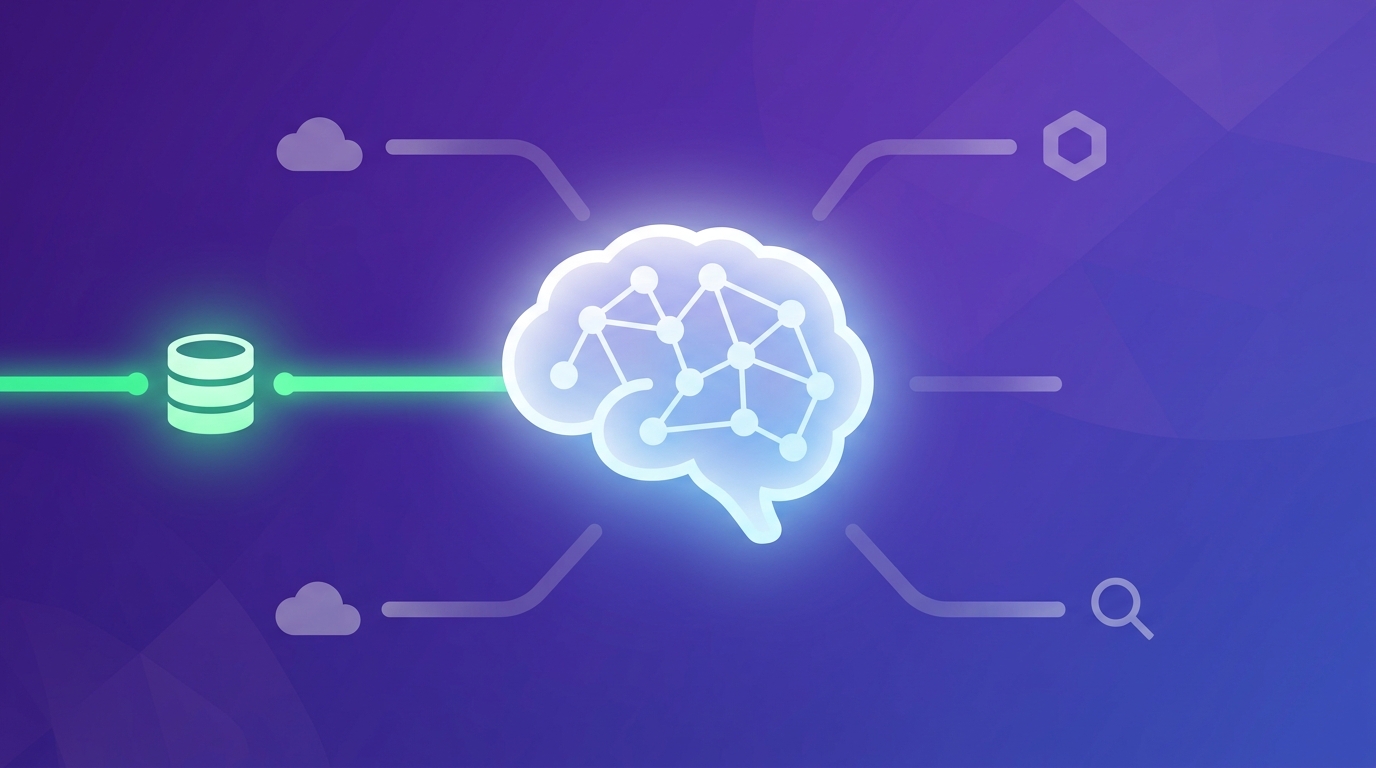
An agentic platform built as an intelligence layer operates differently. Databox’s MCP exposes all connected sources (CRM, marketing, ads, support, operations) through a single server endpoint. Claude, ChatGPT, Cursor, n8n, or any MCP-compatible agent connects once and queries across sources. The sales agent asking about revenue numbers and the marketing agent asking about campaign performance draw from the same source of truth. No point-to-point integrations per agent. No per-source authentication sprawl.
The difference is architectural. Salesforce MCP gives one source to many agents. A multi-source intelligence layer gives many sources to any agent, from one connection.
Evaluation dimension 3: governance and auditability
Salesforce’s governance model for MCP is genuine: OAuth 2.0 authentication, the Einstein Trust Layer for prompt safety, allowlists to control which MCP actions agents can take, and audit trails within the Salesforce ecosystem. For CRM data access, this is mature and enterprise-ready.
Governance becomes fragmented the moment you need cross-source AI access. If your VP of Sales queries Salesforce through one MCP connection, Google Ads through another, and HubSpot through a third, each connection has its own authentication model, its own access controls, and its own audit trail. Who queried what, when, and across which sources? That question has three different answers in three different systems.
A single intelligence layer consolidates governance. One authentication model. One access-control layer. One audit trail. When a RevOps Manager asks “What did the AI agent access to generate this pipeline report?” the answer comes from one place, not three platforms.
The structured comparison
| Evaluation Dimension | Salesforce Einstein + MCP | Multi-Source Intelligence Layer (Databox) |
| Data sources queryable | Salesforce objects only (Opportunities, Accounts, Cases, custom objects) | 130+ sources: CRM, marketing, ads, web analytics, support, operations, all standardized |
| Agent compatibility | Agentforce agents (native); Claude, ChatGPT (via hosted MCP, CRM-scoped) | Any MCP-compatible agent (Claude, ChatGPT, Cursor, n8n) queries all sources through one connection |
| Governance model | OAuth + Einstein Trust Layer + allowlists (Salesforce-scoped) | Single authentication, single access-control layer, single audit trail across all connected sources |
| Cross-source query capability | Requires separate MCP connections per source, each with its own auth and schema | One query, one connection, one response drawing from all sources |
| Semantic reconciliation across sources | Each connector adds its own vocabulary (Salesforce Lead, HubSpot Contact, Google Ads Conversion). AI reconciles on the fly, or guesses. | Metric Library defines terms once, maps them to underlying fields across every source. AI reads the reconciled version, not the raw records. |
What this comparison reveals
The gap between Salesforce Einstein + MCP and a multi-source intelligence layer is architectural. Salesforce built excellent CRM-scoped AI access. The intelligence layer for business data sits beneath every source, not inside one of them. Not a place to check metrics. A system that understands your business and helps agents reason about it.
Through Databox’s MCP, the AI agent does not compute pipeline coverage from raw records. It queries a data layer that already holds the standardized figure, calculated where the metric was defined. The LLM handles the language. The math is already done. Grounded is architectural: the AI reasons from real numbers pulled from where each metric is canonically defined, not from approximations it derived on the fly. That is what makes the answer trustworthy across sources, not just within one.
Three Testable Conditions That Determine Whether Salesforce MCP Alone Is Sufficient for Your Revenue Stack
Three questions decide it. Ask each against your own stack.
1. Do your revenue decisions depend on more than one data source, and do those sources speak the same language? Pull up the last pipeline review your team ran. Count the systems referenced. Then check: does “qualified lead” mean the same thing in Salesforce as in HubSpot, or does each system carry its own definition? If the answer is one system, Salesforce MCP alone matches your decision scope. If it is three to six, and each carries its own vocabulary, your AI agent is answering partial questions with total confidence and reconciling terms on the fly.
2. Do multiple AI agents in your stack need to answer the same questions consistently? A CFO asking Copilot about revenue attainment. A marketing analyst asking Gemini about campaign efficiency. A support lead asking Claude about churn signals. When each agent connects to sources independently, “revenue attainment” is whatever each session computes from whatever data it can reach. A single intelligence layer holds the metric definition once, so every agent reasons from the same figure. Same question, same answer, regardless of which AI the person opened.
3. Does your governance model need to span across data sources? If a compliance review asked for every data access event across every AI agent using your revenue data in the last 30 days, could you produce it from one place? If the answer involves stitching together separate audit logs per source, governance is fragmented at exactly the moment AI access makes fragmentation critical.
Applying the framework
| Condition | Salesforce MCP alone is sufficient if… | A multi-source intelligence layer is required if… |
| Revenue decision scope | All questions your AI agent answers live entirely within CRM data | Pipeline coverage, revenue attainment, or QBR prep requires CRM + marketing + ads + support data |
| Cross-agent consistency | You use one AI agent, or the same question in different AI clients is not expected to return the same number | Multiple AI agents in your stack must return the same answer to the same business question |
| Governance scope | Salesforce-scoped audit trails meet your compliance and visibility requirements | You need a single audit trail for all AI data access across all sources |
If even one condition points to the right column, Salesforce MCP alone creates a structural gap that grows with every source you add and every agent you deploy. That layer is what Databox’s MCP provides: your CRM stays your CRM, and Databox connects to it alongside 130+ other sources through a single authenticated endpoint. Every AI agent in your stack draws from the same canonical figures.
Conclusion
Salesforce MCP solved the right problem: getting CRM data into AI agents without export gymnastics or middleware hacks. For CRM-scoped questions, the value is real and immediate. But revenue decisions are not CRM-scoped. Pipeline coverage depends on deal data, marketing performance, ad efficiency, and engagement signals that live across three to six systems. An AI agent that queries Salesforce brilliantly but cannot see HubSpot, Google Ads, or Intercom in the same session will answer partial questions with complete confidence. A VP of Sales preparing for a board review cannot afford that.
Frequently Asked Questions
What is Salesforce MCP, and how does it differ from Salesforce's standard APIs?
Salesforce MCP (Model Context Protocol) is an open standard that gives AI agents like Claude and ChatGPT structured, authenticated access to live Salesforce data (Opportunities, Accounts, Contacts, and custom objects) through natural-language queries. Salesforce made its hosted MCP servers generally available in late April 2026. Instead of relying on custom API integrations or CSV exports, a Revenue Operations Manager can ask an AI agent “Show me Q3 pipeline by region” and get a live answer from CRM data directly.
Can I connect Salesforce MCP to Claude and ChatGPT at the same time?
Yes. Salesforce’s hosted MCP servers support connections from multiple AI agents simultaneously. A VP of Sales can use Claude for deal analysis while a Head of Marketing Operations uses ChatGPT for lead scoring reviews, each connecting to the same Salesforce org through separate authenticated sessions. Each connection is scoped to Salesforce data. If either agent needs marketing or ad platform data, that requires separate MCP connections to those sources.
How does Salesforce Agentforce relate to Salesforce MCP for external AI agents?
Agentforce is Salesforce’s native AI agent platform that uses MCP internally to perform actions within the Salesforce ecosystem: case routing, lead assignment, workflow automation. External AI agent connectivity is a separate capability: Salesforce’s hosted MCP servers let Claude, ChatGPT, and other third-party agents query Salesforce data, but those queries are scoped to CRM objects. Agentforce agents operate within Salesforce; external agents connect to Salesforce. The distinction matters for a RevOps Manager evaluating whether their agent architecture should be Salesforce-native or multi-platform.
What security and governance controls does Salesforce MCP provide for AI agent access?
Salesforce MCP uses OAuth 2.0 for authentication, the Einstein Trust Layer for prompt safety and data masking, allowlists to control which MCP actions agents can perform, and audit trails that track data access within the Salesforce ecosystem. These controls are enterprise-grade for CRM-scoped access. The governance limitation appears when AI agents also access marketing, ad, and support platforms: each source requires its own authentication and produces its own audit trail, fragmenting the governance view a security team or compliance officer needs.
Why does an AI agent using Databox's MCP produce more accurate numbers than one calculating from raw records?
Databox’s MCP does not ask the LLM to do the math. When an AI agent queries pipeline coverage or CAC through Databox, it receives the standardized figure that has already been calculated in the Metric Library, where the metric is canonically defined. The LLM handles the language of the request and the response. The computation runs on Databox’s data infrastructure, not on the language model. This is what makes the answer trustworthy across sources: the AI reasons from real numbers pulled from where each metric is defined, not from approximations it derived on the fly.
Do multiple AI agents connected to the same data sources produce the same answers?
Only if they draw from a shared metric layer. When each AI agent connects independently to raw sources, “pipeline coverage” or “revenue attainment” becomes whatever that session computes from whatever data it can reach — and two sessions may arrive at slightly different numbers using the same inputs. A single intelligence layer like Databox’s MCP holds the canonical metric definition in one place. Every agent connected to it reasons from the same figure, so the same business question returns the same answer regardless of which AI the person opened.
Does Databox replace Salesforce when used as an intelligence layer with MCP?
No. Databox sits beneath your AI agents, not between you and Salesforce. Your CRM stays your CRM. Salesforce remains your system of record for deals, contacts, and account management. Databox connects to Salesforce alongside 130+ other sources (Google Ads, HubSpot, GA4, Intercom, and more), standardizes the metrics through its Metric Library, and exposes all of them through a single MCP server endpoint. When Claude or ChatGPT connects to Databox’s MCP, the agent queries all sources in one session (including Salesforce data) without replacing any system in your stack.
What types of cross-source questions can an AI agent answer through Databox's MCP that it cannot answer through Salesforce MCP alone?
A Salesforce-only AI agent can answer “What is the total pipeline value in Stage 4?” but cannot answer “Which Stage 4 accounts have declining email open rates in HubSpot and rising cost-per-lead in Google Ads?” That question requires CRM, marketing automation, and ad platform data in the same query context. Through Databox’s MCP, an AI agent can correlate pipeline value with campaign performance, ad efficiency, engagement trends, and support ticket volume in a single response, giving a VP of Sales or RevOps Manager the cross-source context that pipeline coverage and revenue attainment decisions require.