You asked AI about your pipelinebudgetrevenue.
Do you know where it got the answer?
Probably the internet, which is also where it learned to sound that confident. Not your definitions, your goals, or last week’s pipeline review. There’s a reason this keeps happening, and it’s not the model.
Context is what the AI is missing.
Your team has it. The agreed definition of a qualified lead. The Q3 goal and how you’re tracking against it. The interpretation of what a good week looks like for your business, specifically.
None of that lives on the internet. It lives inside your company. In your tools, your dashboards, your reporting, the heads of the people who’ve been there long enough to know what matters.
That’s context. The lived definition of how your business works. Generic LLMs don’t have any of it, so they use the internet to help them fill the gaps.
The fix is to put that context somewhere the AI can read it. Defined, so every answer uses the same version. Governed, so the definitions don’t drift. Connected, so the AI is reading from what’s true today.
That’s a context layer. Trustworthy AI starts there.
This is what trustworthy AI looks like
Databox brings all four components into one platform. Your data, your definitions, your business reality, in one place, your AI can read.
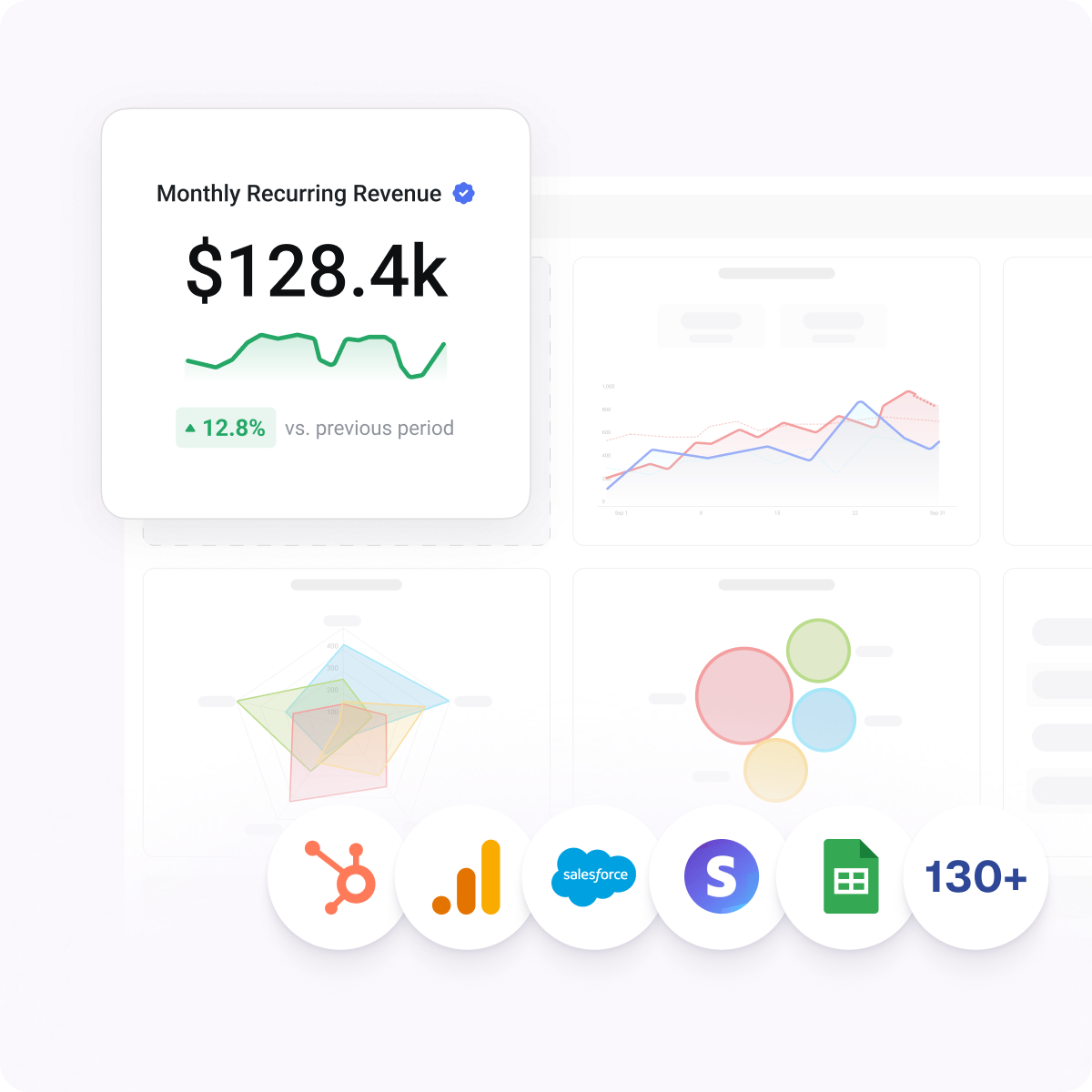
One source of truth.
Databox pulls your full business stack into one platform so the AI can analyze across systems, not one at a time.
- Connect your marketing, sales, product, finance, and ops tools with 130+ one-click integrations
- Bring in custom data through spreadsheets or custom integrations
- Keep every answer current with automatic syncs across every connected source
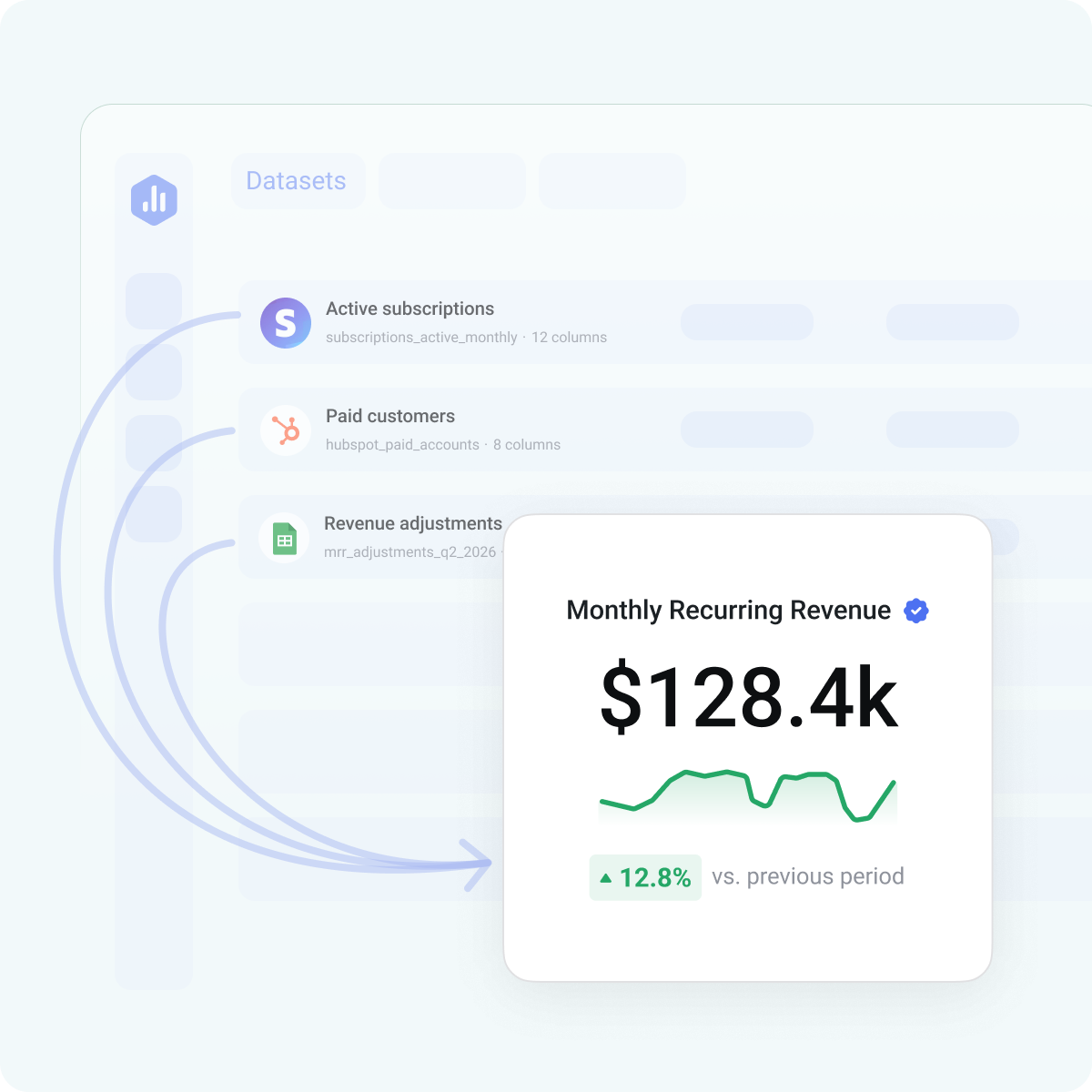
Metrics defined the way your team uses them.
Defined metrics are the meaning layer. Databox lets you build the metrics your business actually runs on, with the definitions and datasets that back them up, so the AI reads from your version of the truth.
- Build custom metrics that match how your team measures performance
- Build your datasets and define what every column means
- Use the same definition across every dashboard, report, and AI answer
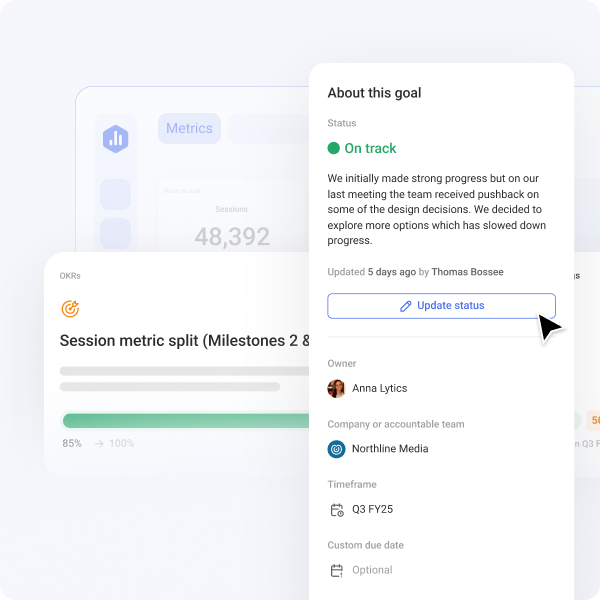
Definitions your team controls.
The trusted source is the governance layer. Databox keeps your definitions consistent, attributed, and auditable, so the AI is always reading from what your team has signed off on.
- Know who built what, with ownership attached to every metric and dataset
- Control who can edit, view, or build with admin, editor, and viewer permissions
- Track every change across your account with a full activity log
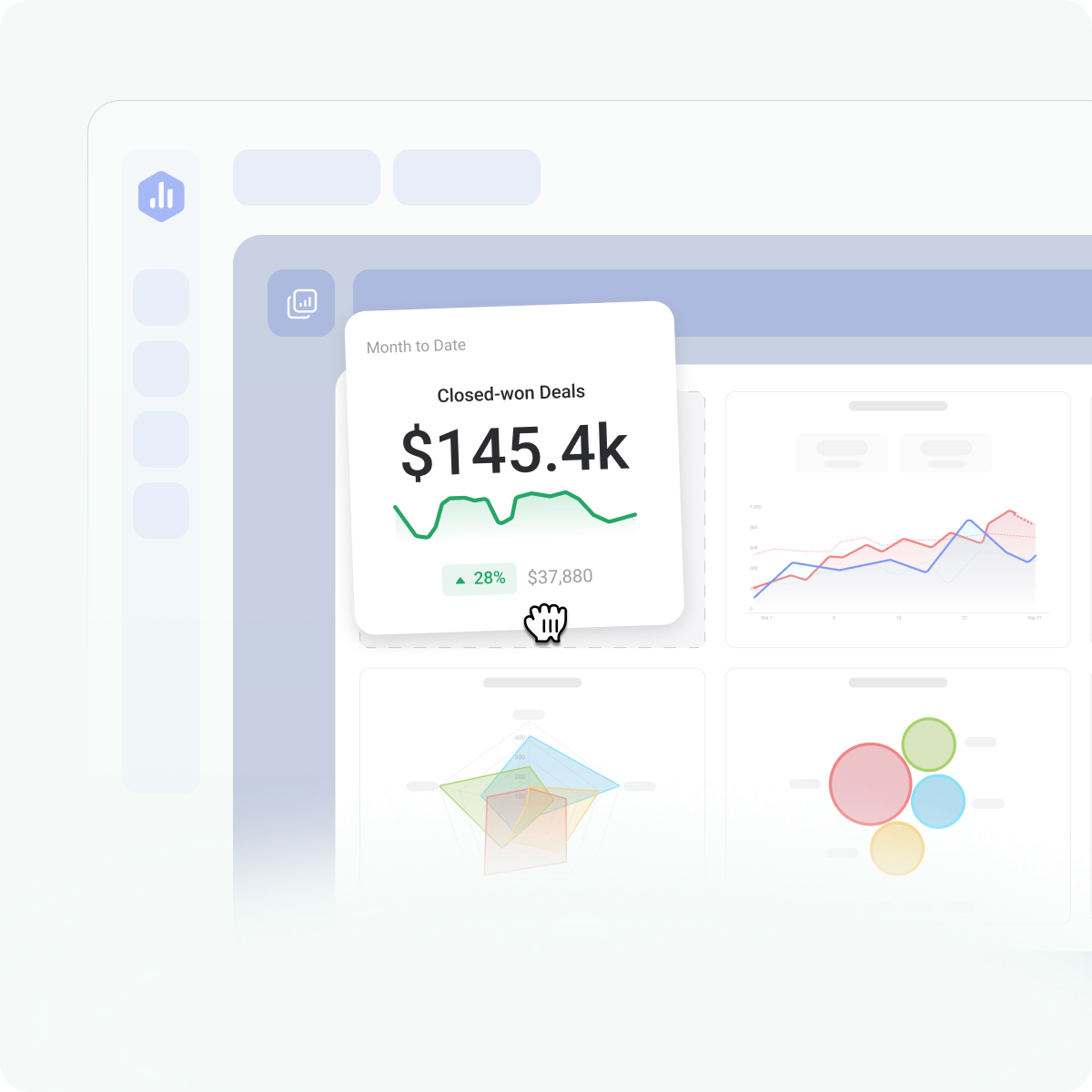
Every number, in context.
Business reality is the interpretation layer. Databox layers your goals, history, and forecasts on top of every metric, so the AI knows whether a number is on pace, surprising, or worth flagging.
- Track progress against OKRs and goals attached to every metric you care about.
- Spot what’s changing with trends, baselines, and historical data from your own performance.
- Compare actual performance to your plan with forecasts built right into your
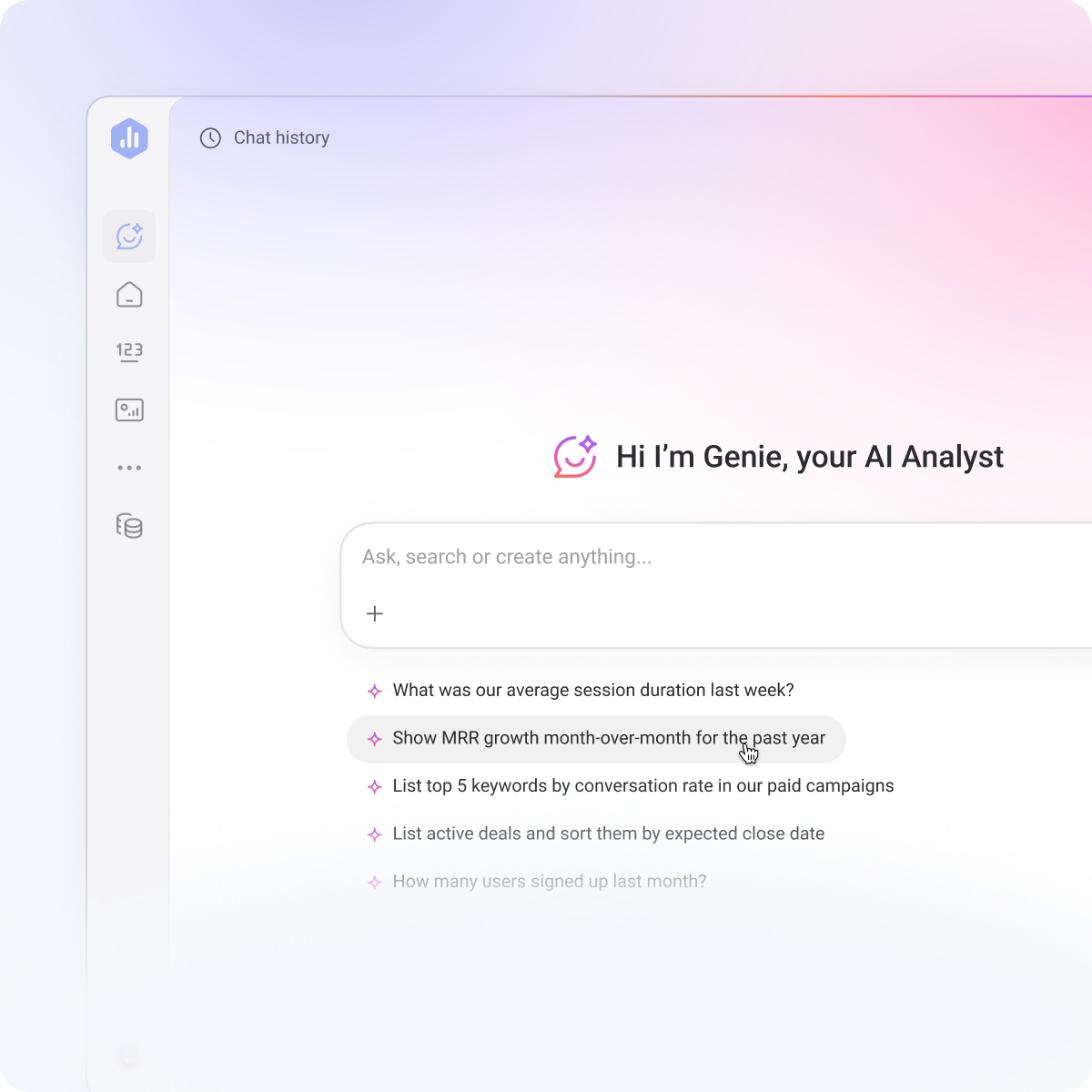
Ask anywhere. Get the same trusted answer.
The four components are the engine. Genie and MCP are the interfaces. Whether you ask in Genie, Databox’s AI Analyst, or in ChatGPT or Claude, the answer comes from your context layer.
The teams already running on a real context layer







FAQ
What is an AI hallucination, and why does it happen with business data?
An AI hallucination is when a large language model produces an answer that sounds correct but isn’t grounded in real information. With business data, it usually happens because the model has no access to how a specific company defines its metrics, so it fills in those gaps with the most statistically likely interpretation. The model isn’t malfunctioning. It’s generating language without the underlying business context.
Won’t better LLMs eventually fix AI hallucinations?
Better models write smoother, more convincing answers, but they don’t solve for missing context. A model that hasn’t been given your team’s definition of a qualified lead will keep guessing at it, no matter how advanced it is. The fix is at the data and context layer, not the model layer.
What is a context layer for AI analysis?
A context layer is the place where a company’s verified metrics, agreed definitions, and business logic are stored in a structured form that an AI system can read. It sits between the business and any AI tool, so that when the AI is asked a question about company performance, it works from a single source of truth instead of inferring an answer.
How is a context layer different from a semantic layer?
A semantic layer is a technical translation layer that maps raw data to business-friendly terms inside a BI or modeling tool. A context layer is broader. It includes the semantic layer, but also the metric definitions, reporting structures, benchmarks, and goals that an AI needs to interpret a question correctly. Semantic layers were built for dashboards. Context layers are built for AI.
How is a context layer different from a data warehouse?
A data warehouse stores raw and modeled data. It doesn’t define how that data should be interpreted, which metrics matter, or how the business measures success. A context layer sits on top of the warehouse or on top of the source systems directly, and turns that data into something an AI can reason over.
Can I trust ChatGPT or Claude to analyze my business data directly?
On their own, no. Generic LLMs don’t know your metric definitions, your reporting logic, or what your business counts as success. Connecting them to a context layer like Databox, either through Databox MCP or by using Genie inside Databox, gives them the grounding needed to produce trustworthy answers.



compliant
 SOC 2
SOC 2certified