One trusted source of truth for your team and your AI
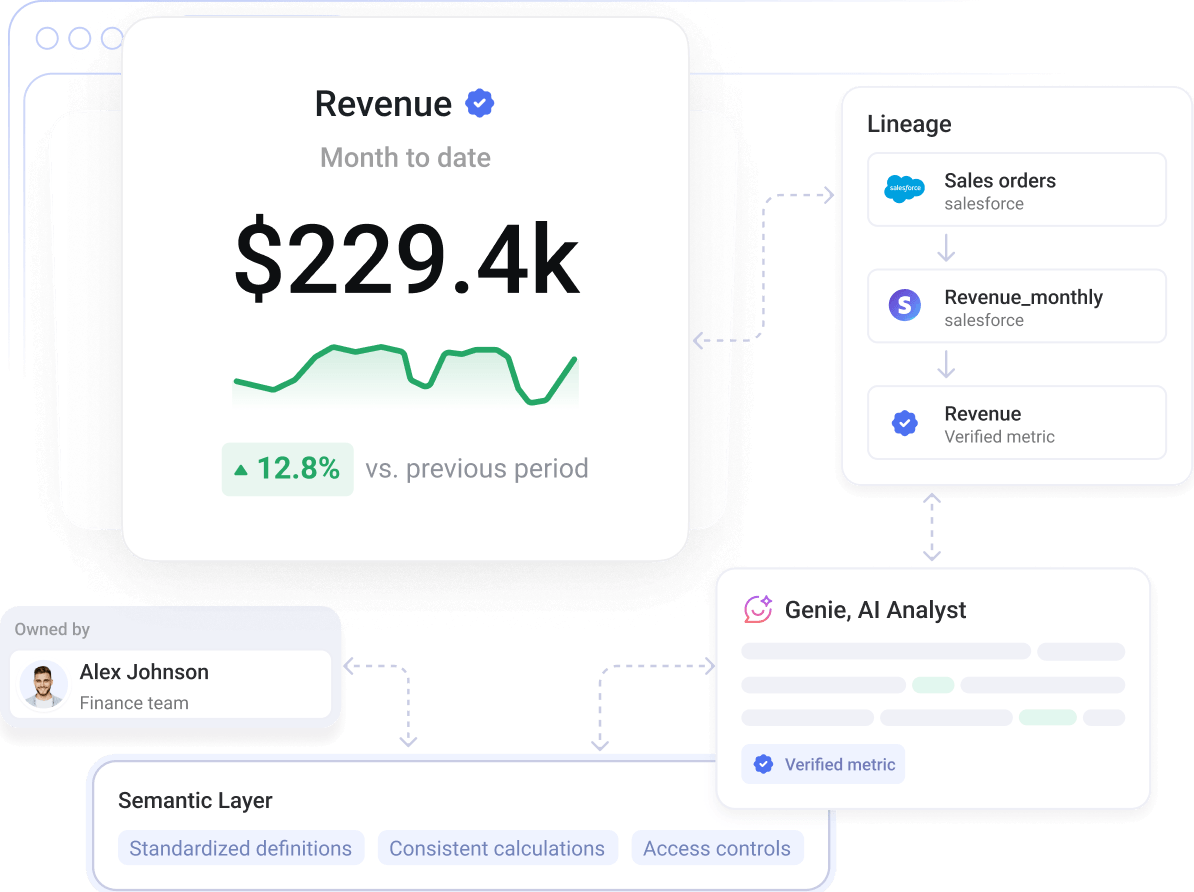
Defined metrics, clear owners, and a verified version of every number. Databox keeps governance and data in the same place, so humans and AI start from the same trusted source.
Trusted by 20,000+ teams worldwide








Governance is what makes AI trustworthy
In the AI era, the quality of your answers depends entirely on the quality of your data layer. Governance is the foundation that lets your team and your AI move faster with confidence.
Confidence in every decision
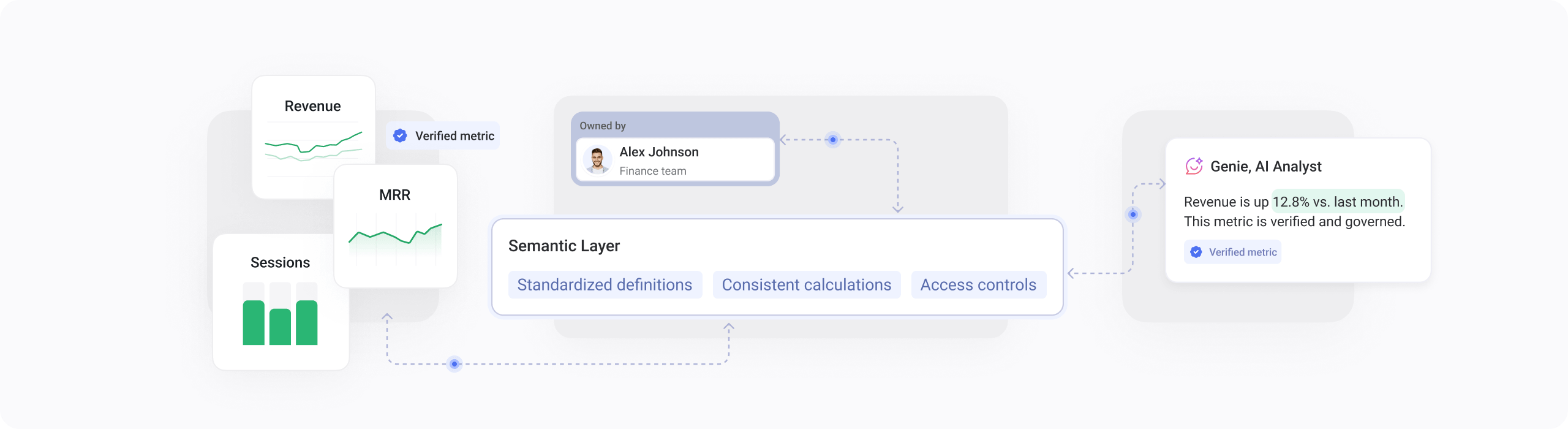
Every number presented carries the trust of a verified, owned asset. Executives, stakeholders, and the board can act on what they see.
One version of truth across every team
Sales, Marketing, and Finance walk into the meeting with the same numbers, so the conversation moves to what to do about them.
A data layer that scales with your company
As the team grows and the stack expands, governance keeps the workspace clean and the trust compounding.
AI answers you can trust
Our AI Analyst reasons over verified, defined, owned data, so AI answers come from the same source your team’s decisions do.
Agree on what every number means
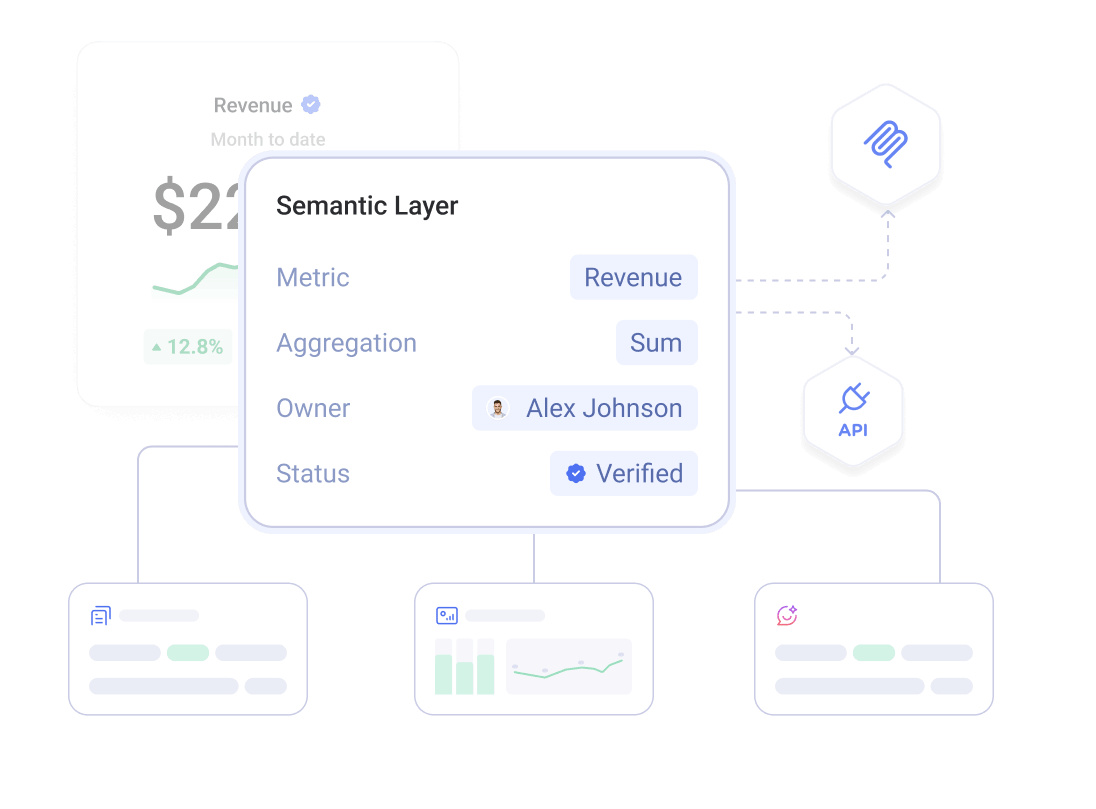
Define what each metric means, so your team and AI read your data the same way.
Document your data
Add plain-language descriptions to each dataset and column so anyone reading them, person or AI, starts from the same definition.
Add synonyms
Make sure questions about “MRR” and “monthly recurring revenue” return the same answer, no matter how someone phrases it.
Standardize time windows
Set a default time dimension on each dataset so trends and comparisons stay consistent across the workspace.
Know which numbers to trust and who owns it
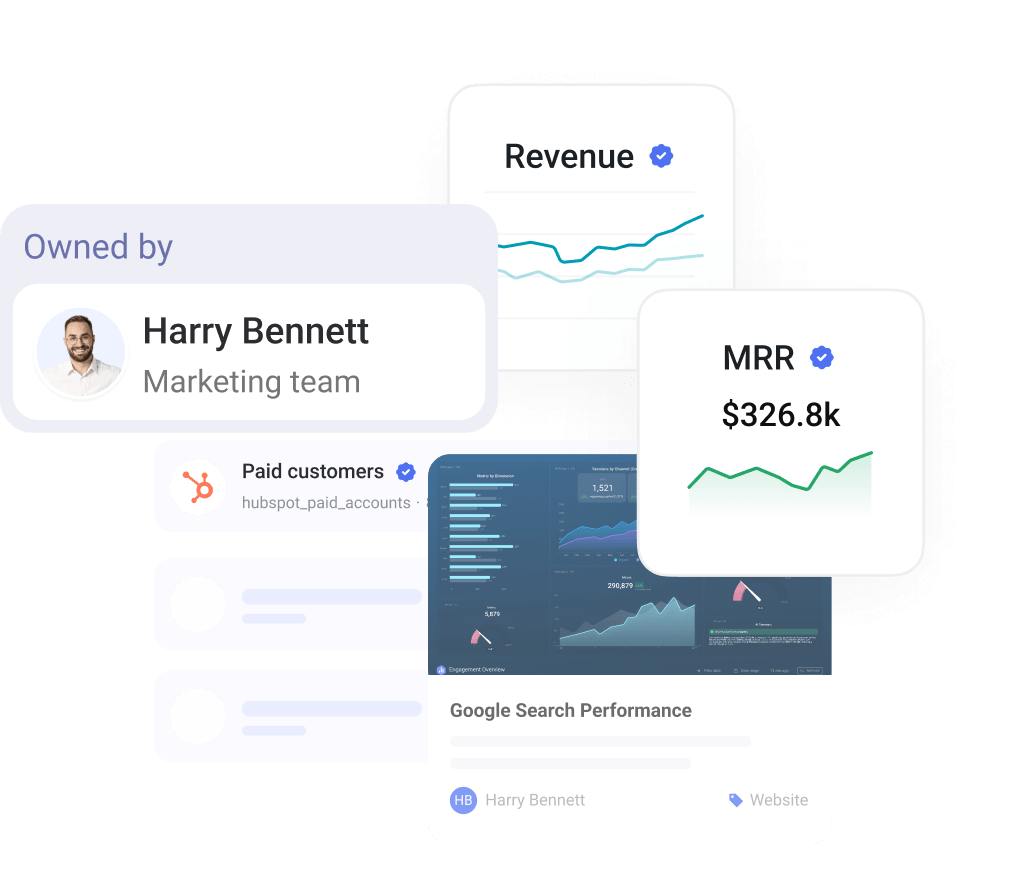
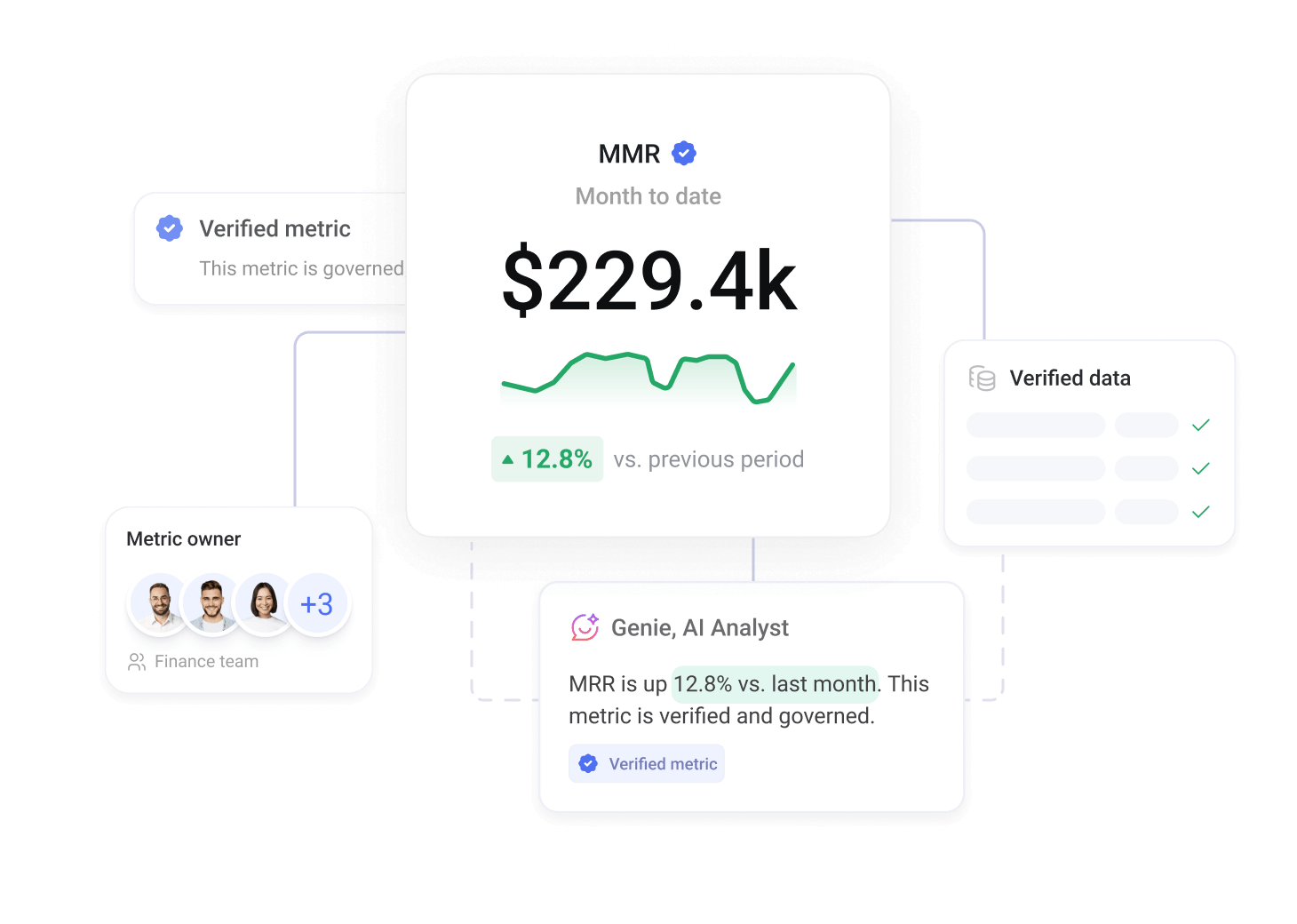
Verify the official version of every important asset and attach an owner, so trust is visible and accountability is built in.
- Verify your assets Mark any metric, dashboard, report, or dataset as official, and a verified badge appears wherever the asset shows up.
- Assign clear ownership Every asset gets assigned an owner, so questions and change requests have a clear place to land.
- Keep the history Track who verified each asset and when, so the verification record stays attached to the work itself.
Stay in control as your workspace grows
Govern who sees what, track every change, and trace data flow as your team scales and your stack expands.
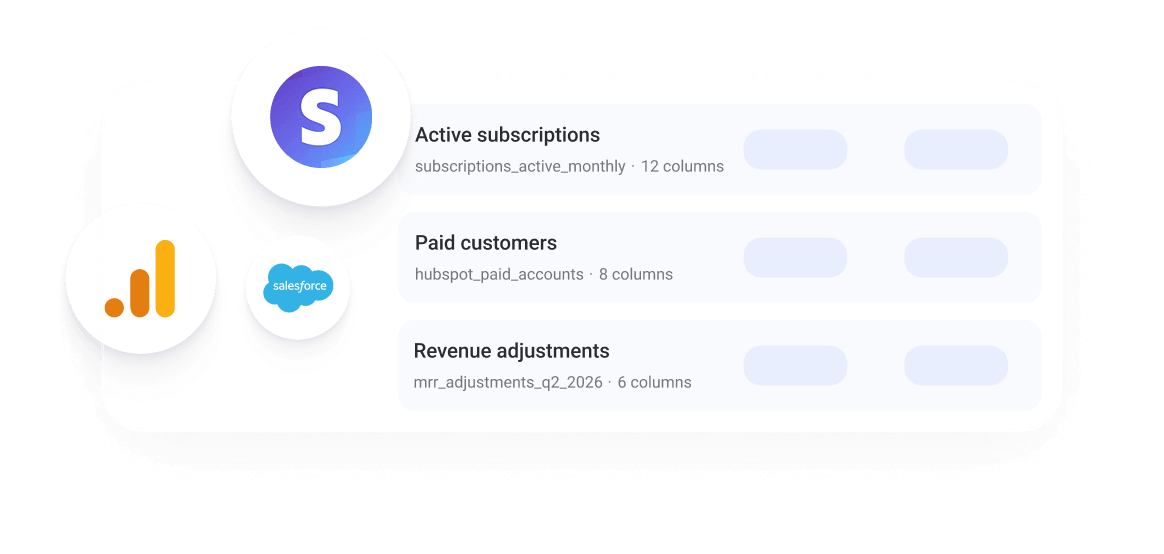
Scope access carefully
Set granular permissions on every metric, dashboard, report, and dataset, so sensitive data stays with the people who should see it.
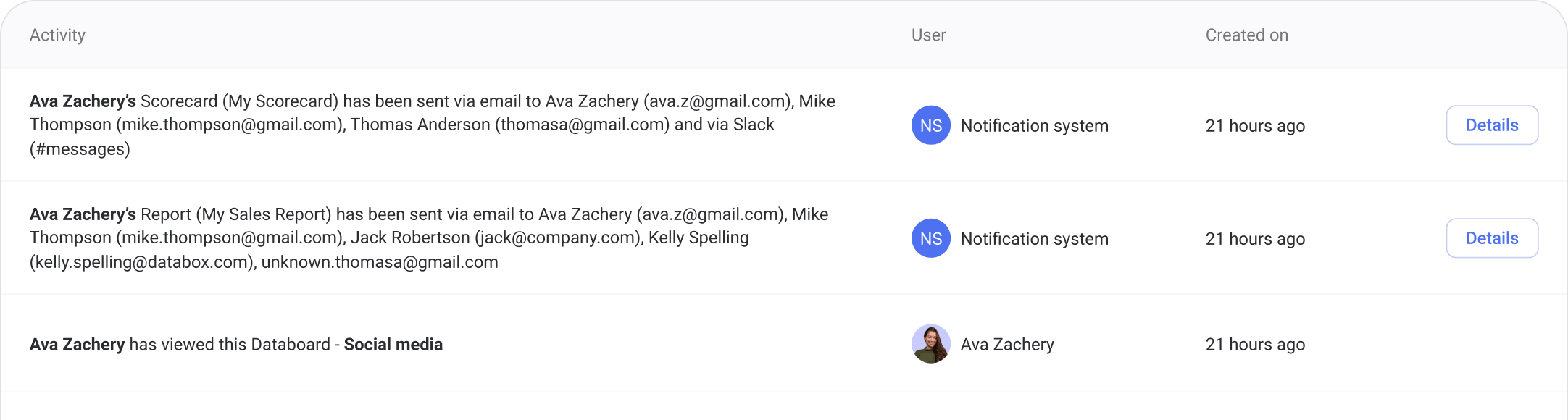
Audit every change
Track every governance action in the activity log, filter by user or asset, and investigate questions without rebuilding history from memory.
Trace any number Soon
Follow a metric back to its source and see what depends on it downstream before you change a definition.
Trust every answer your AI gives
The work your team does in governance shapes every answer your AI Analyst gives.
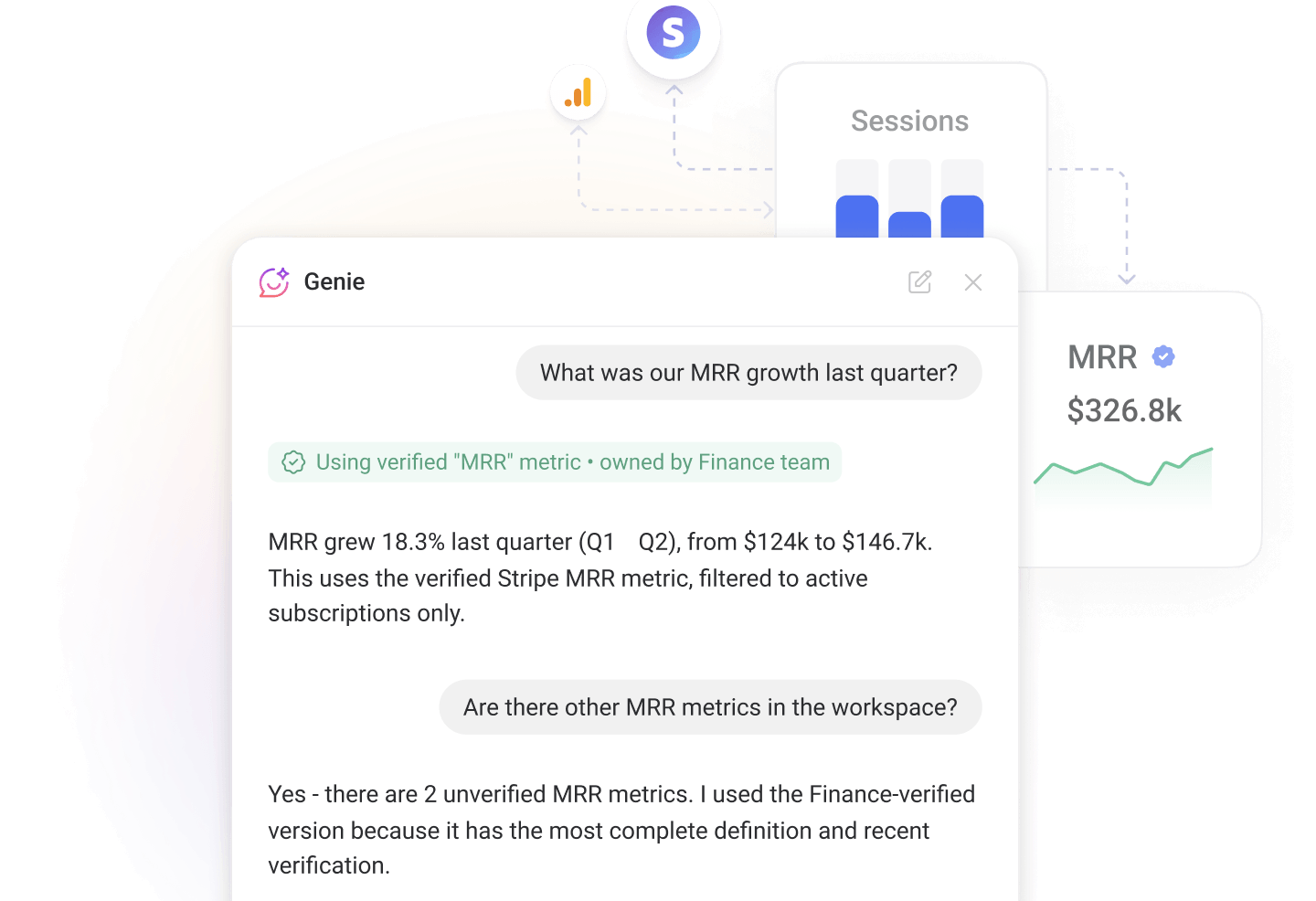
- Verified assets get priority When multiple versions of the same metric exist in your workspace, your AI pulls from the verified, owned one.
- Your team’s language carries through Semantic layer teaches your AI how your team talks about data, so a question about “MRR” returns the same answer as one about “monthly recurring revenue.”
- Ownership context guides every answer Your AI Analyst knows which team owns which metric, so when Sales and Finance both have MRR definitions, the answer comes from the team accountable for it.
Stop defending numbers.
Start acting on them.
Verify your metrics, govern access, and give AI a trusted foundation to reason from.
-
GDPR
compliant -
 SOC 2
SOC 2
certified
Frequently asked questions
What is Data Governance in Databox?
Data Governance is a set of capabilities inside Databox that lets you mark which assets are official, control who has access to what, see who owns each one, know when it was reviewed, and track every change. It covers Verification, Roles and Permissions, Ownership, Lineage, and the Activity Log.
How is Data Governance in Databox different from governance in a standalone semantic layer like dbt or Cube?
A standalone semantic layer lives in your data stack and is maintained by data engineers. Databox keeps governance in the same workspace as your Databoards, Reports, and AI tools, so the people accountable for each metric can own its definition where the dashboards live. There’s no separate stack to maintain and no data engineering team required to mark an asset official or change who can use it.
What can I use Data Governance for?
Most teams use it to end "whose number is right" debates, stop shadow Databoards, control access to sensitive data, give their AI a trusted foundation to answer from, and give Executives a workspace they can stand behind without auditing it themselves.
Do I need a data engineer to set up Semantic Metadata or Verification?
No. Anyone with edit rights on an asset can verify it, and Semantic Metadata is configured through a panel on the dataset or column, not through code. The people who own each metric in practice can govern it directly.
How does data governance and semantics change the answers Genie, the AI Analyst, gives my team?
Genie prioritizes verified assets when generating answers and reads Semantic Metadata to interpret your questions correctly. A question about “MRR” returns the same answer as one about “monthly recurring revenue” if you’ve set those as synonyms, and Genie will draw from the official version of a metric instead of a shadow one when both exist.
Does this also apply to AI tools outside Databox, like Claude or ChatGPT?
Yes, through Databox MCP. MCP brings your Databox data into other AI tools your team uses, and those tools read from the same governed layer Genie does. The verified, defined, owned version of a metric is the version those AI tools see.