

Granola
Granola MCP Connector for Databox
Connect Granola to your AI Analyst through MCP. It reads the meeting notes and transcripts behind your metrics, explaining a change in a deal with the real conversation. Granola is a live Databox connector.
TL;DR
Get more context from your Granola data
- One-click, pre-built connector. Granola is a live Databox connector, so you connect your account in one click, no code needed.
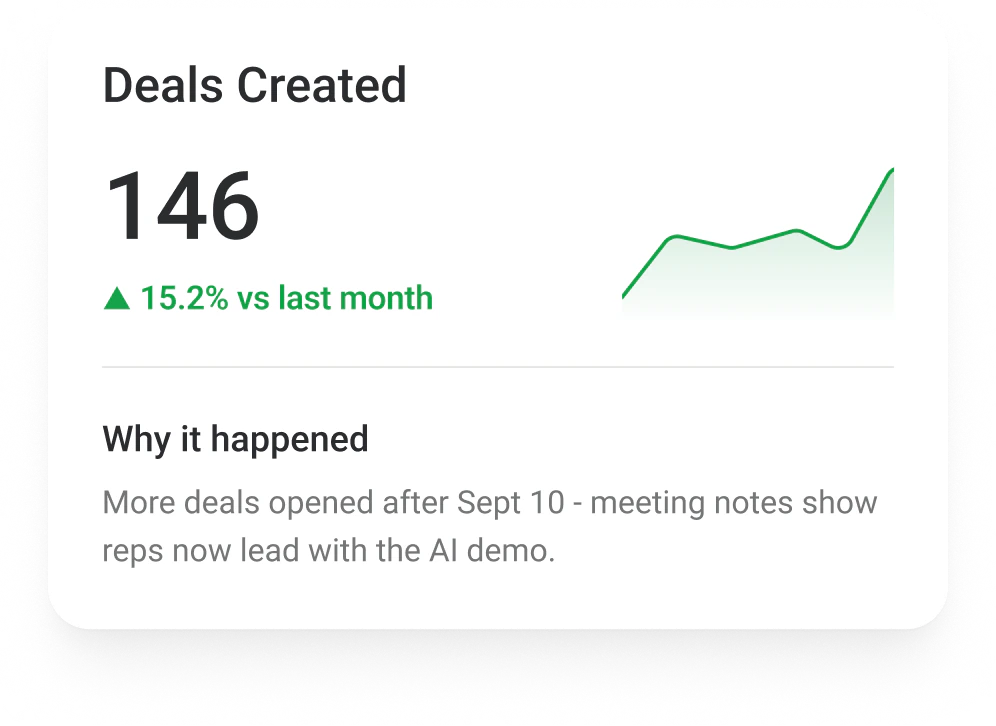
- More than the numbers: your AI Analyst reads the actual meeting notes and transcripts behind your metrics.
- Sharper answers: it can explain a change in a deal or a project using the real conversation, not just the number.
How to use it
Step 1
Open connector settings
Go to your AI Analyst settings → Connectors.
Step 2
Find Granola
Under Available connectors, select Connect next to Granola.
Step 3
Authenticate with Granola
Sign in with your Granola account and set tool permissions per tool.
Step 4
Ask anything
Ask a question that touches Granola - it now pulls the record behind the number automatically.
The Databox difference
Why connecting MCP through Databox is different
You can connect this same MCP server directly to any AI tool. Here’s what changes when you connect it through Databox instead.
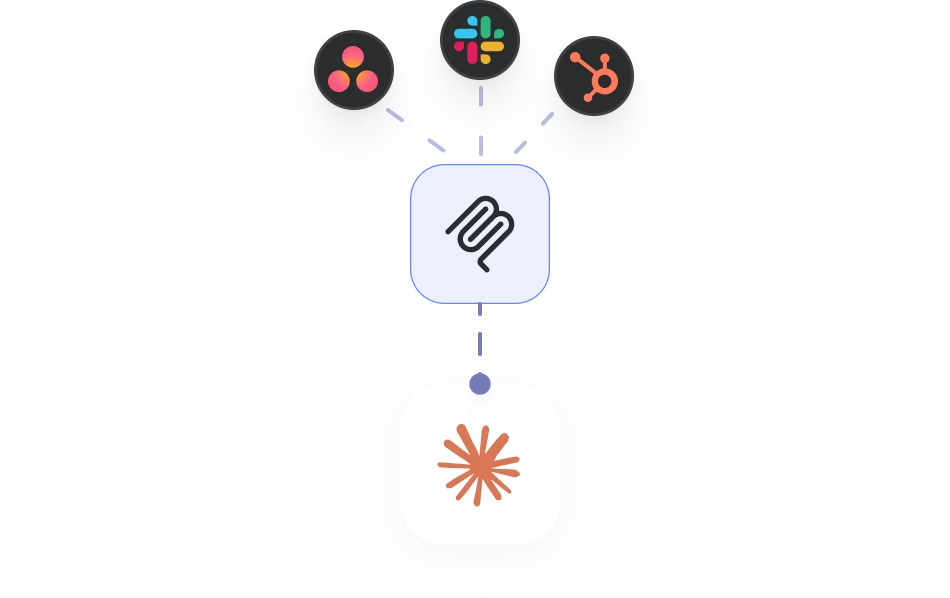
One tool, limited to MCP data
- Only sees what this MCP server exposes, nothing more
- No connection to your CRM, chat, or revenue data
- Not wired into your business context, so nothing runs automatically
With Databox
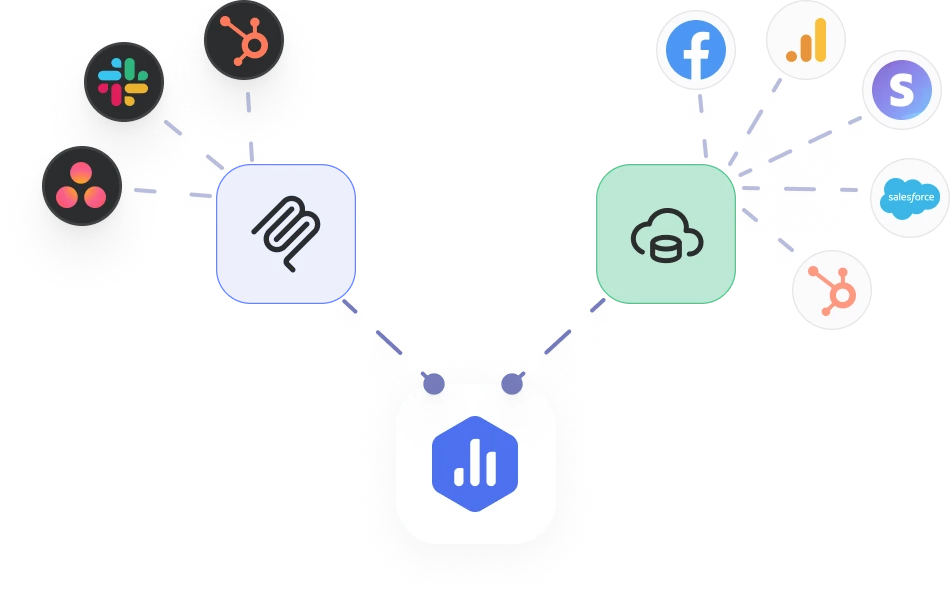
Enriched data, the whole story
- The MCP connector brings in this data, same as anywhere else
- Plus your other Databox integrations, already connected
- Your AI Analyst reasons over the whole story, not just this one tool
- Runs automatically with Routines, reusable in every Skill
Related
More like this

Airtable
Productivity
See the record and base behind an operations metric, straight from Airtable.

Ahrefs
SEO
See the backlink and site audit detail behind an SEO metric, straight from Ahrefs.

Asana
Project Management
Bring the task and comment history behind your project metrics into your AI Analyst, straight from Asana.
FAQ
Frequently asked questions
Is there an official Granola MCP server?
Yes. Granola runs its own remote MCP server, and Databox connects to it as a pre-built connector.
Does connecting Granola cost extra?
No. MCP connectors are included with your AI Analyst on every plan that includes it.
What can my AI Analyst read in Granola?
Meeting notes, transcripts, and attendees, scoped to what you allow.
Is my Granola data secure?
Granola's MCP server uses OAuth, so your AI Analyst only sees what your Granola account already has access to, and you can revoke access at any time.
What is an MCP connector?
An MCP connector links your AI Analyst to an external tool through the Model Context Protocol, an open standard for connecting AI assistants to real business systems. Once connected, your AI Analyst can read (and soon act on) the records behind your metrics - deals, tickets, conversations, campaigns - without you switching tabs.
How is an MCP connector different from a Databox integration?
A Databox integration brings your metrics into Databox so you can track, visualize and report on them. An MCP connector gives your AI Analyst access to the records behind those metrics - the deal, the ticket, the ad, the Slack thread - so it can explain why a number moved and act on it in that tool. Many tools, like HubSpot and Facebook Ads, have both, and they work best together: the integration shows what changed, the connector shows why.
Can I connect any tool, or only the ones in the connector library?
Any tool with an MCP server. You can pick an official connector built by Databox, then click connect and sign in. Or you can add a custom connector: paste the server URL, choose how it signs in (OAuth, API key, bearer token or none), name it and connect.
Is my data safe when I connect a custom MCP server?
You decide what each connector can do. Every tool on a connector has its own setting - Always allow, Needs approval or Blocked - and every tool starts on Needs approval. Official connectors are reviewed by Databox. Custom servers are not, and once connected, a server can access your AI Analyst's content and share data outside Databox. Only connect servers you trust. You can change permissions or disconnect at any time.
Do MCP connectors cost extra?
No. MCP connectors are included with your AI Analyst at no extra cost.
What can my AI Analyst do with a connected tool today?
It can read and act. Read tools let it look up deals, tickets, campaigns and messages to explain why a metric moved, answer a question or run a Routine. Write tools let it take action in the tool, like updating a deal stage, sending a Slack message or creating a task. Every action follows the permissions you set, and new tools start on Needs approval.
Give your AI Analyst the full picture
Connect the tools where your business happens, official or custom, and let your AI Analyst explain what changed and why.