
Data governance
Know which numbers to trust
Give every metric a clear owner, verified status, and complete history, so your team and AI Analyst work from data you trust.
Trusted by 20,000+ teams worldwide








Keep your data trusted as your team grows
Databox keeps reporting and AI analysis grounded in data your team trusts. Verify important assets, assign owners, control access, and trace every change, so everyone works from the right data.

“For us, the transparency and awareness, the alignment with the team has been really accelerated. We had the ability for everyone to gather around and agree on what metrics are the ones that matter to us that everyone should know and everyone should be focusing on.”
 Chris Wilkie
Head of Marketing, Stampede
Chris Wilkie
Head of Marketing, Stampede
Know which data you can trust
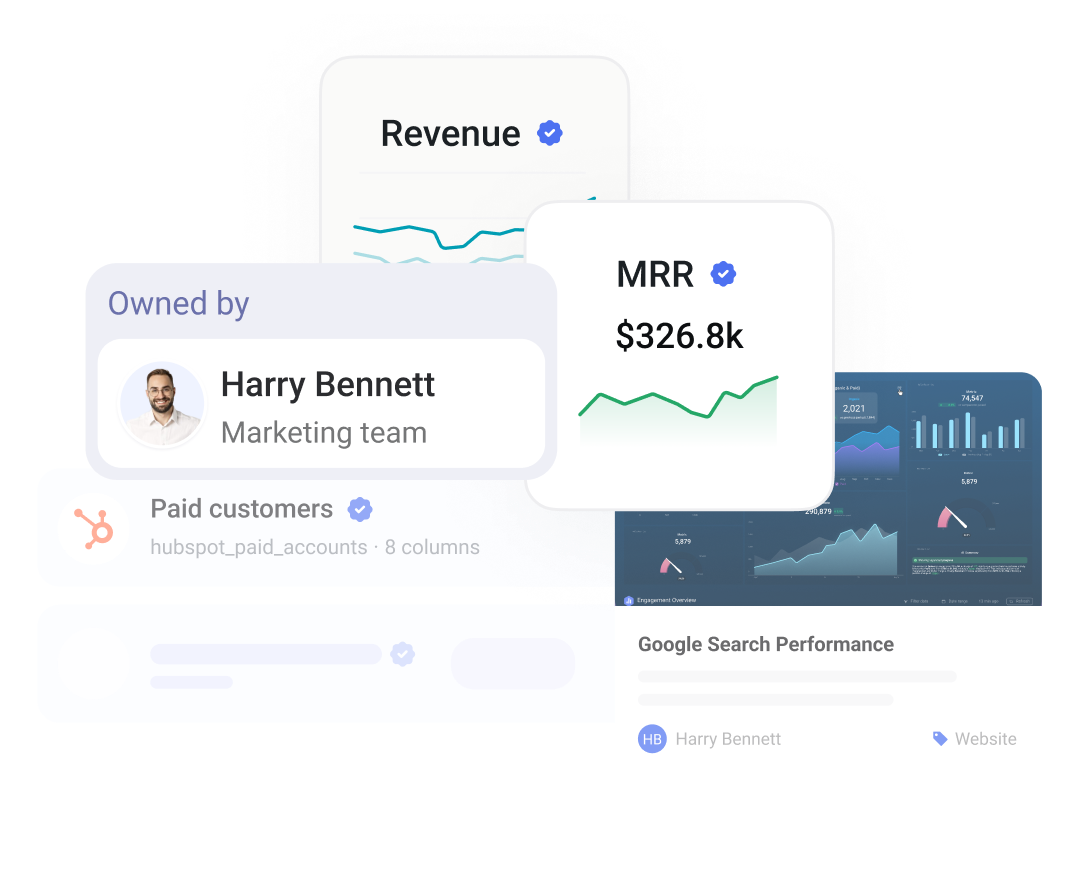
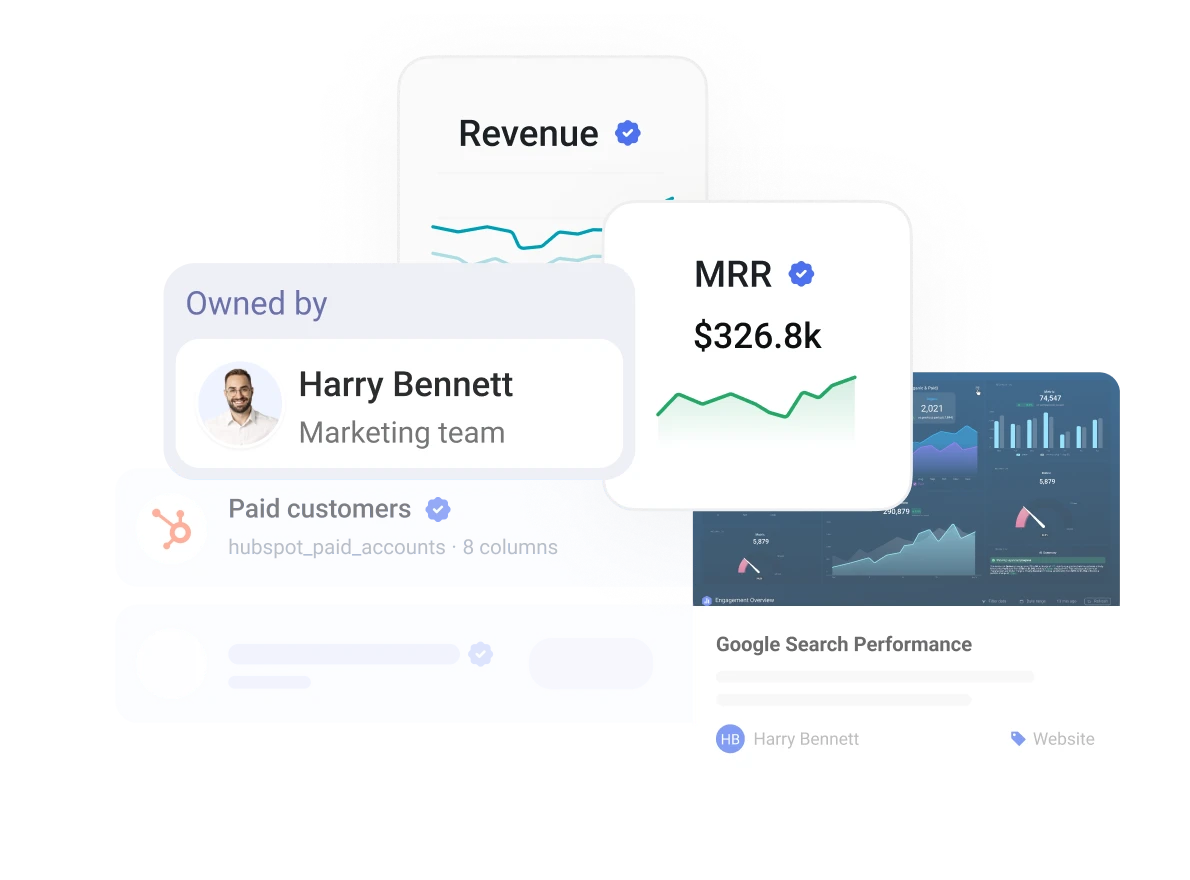
Verify trusted metrics, dashboards, and datasets, and make the person responsible for each one clear.
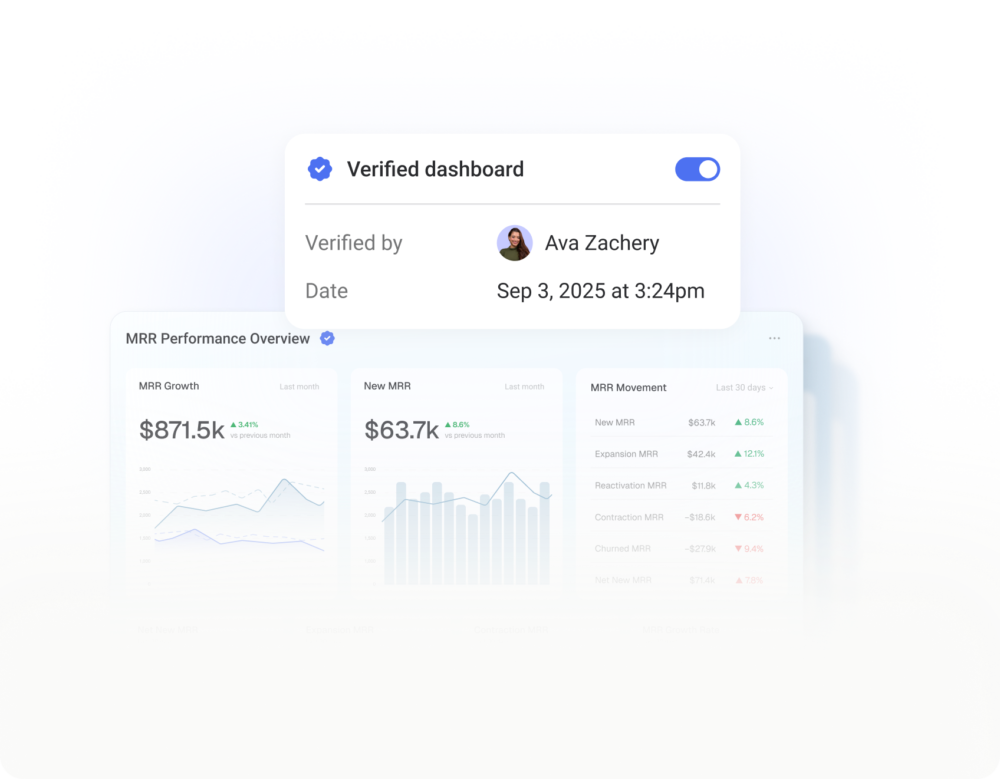
Asset verification
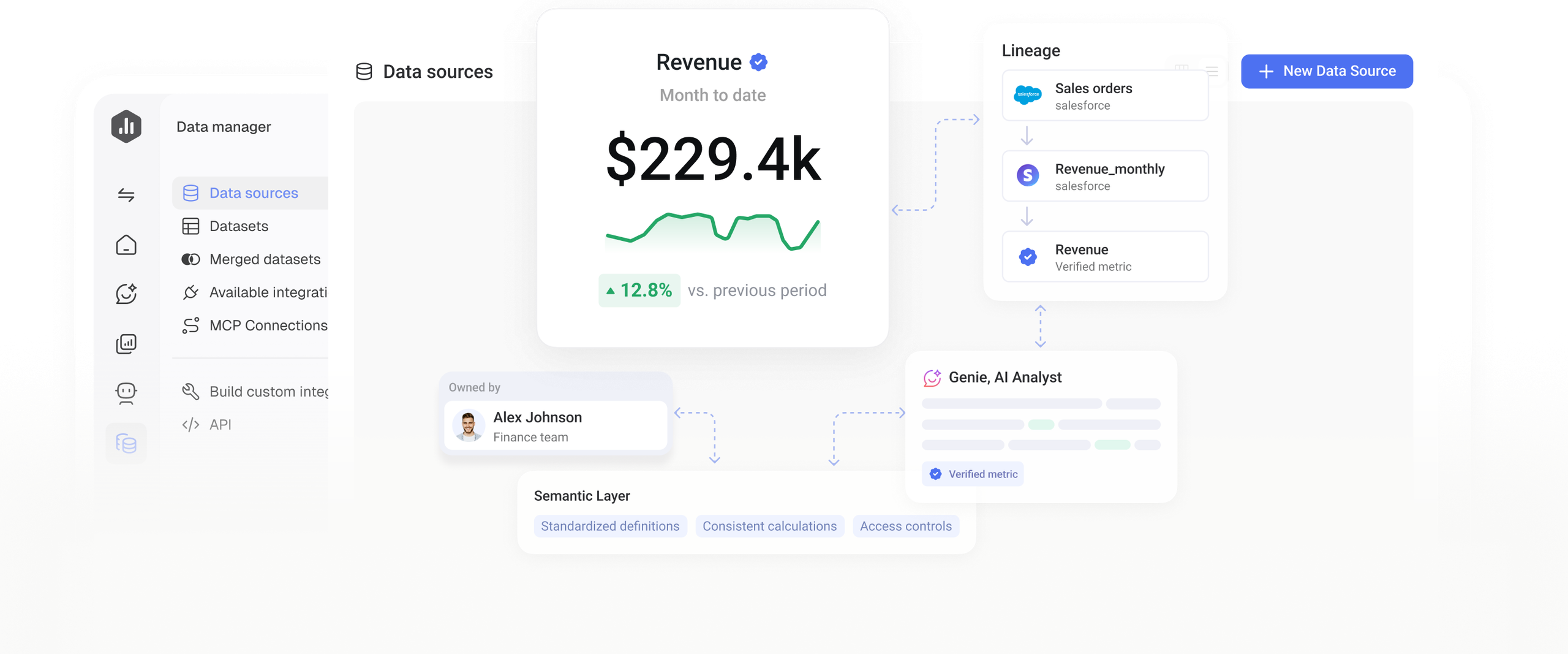
Mark an asset as verified, and its badge appears wherever the asset is used. AI Analyst prioritizes verified assets when answering questions.
Ownership
Every asset has a named owner, so your team knows who to contact with questions or change requests.
Verification history
See who verified an asset and when, so you can confirm its status is still current.
Stay in control as your team grows
Give everyone the access they need, track every change, and see where each metric is used.
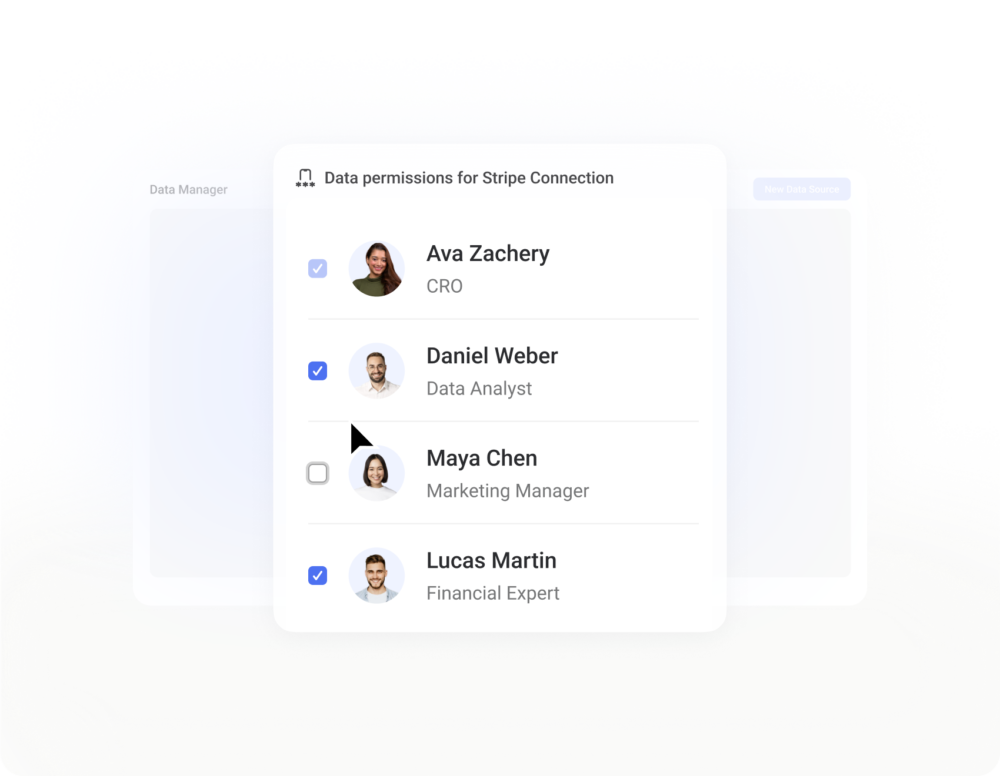
Roles and permissions
Control who can view and edit data, down to a single asset. Everyone gets the access they need, and nothing more.
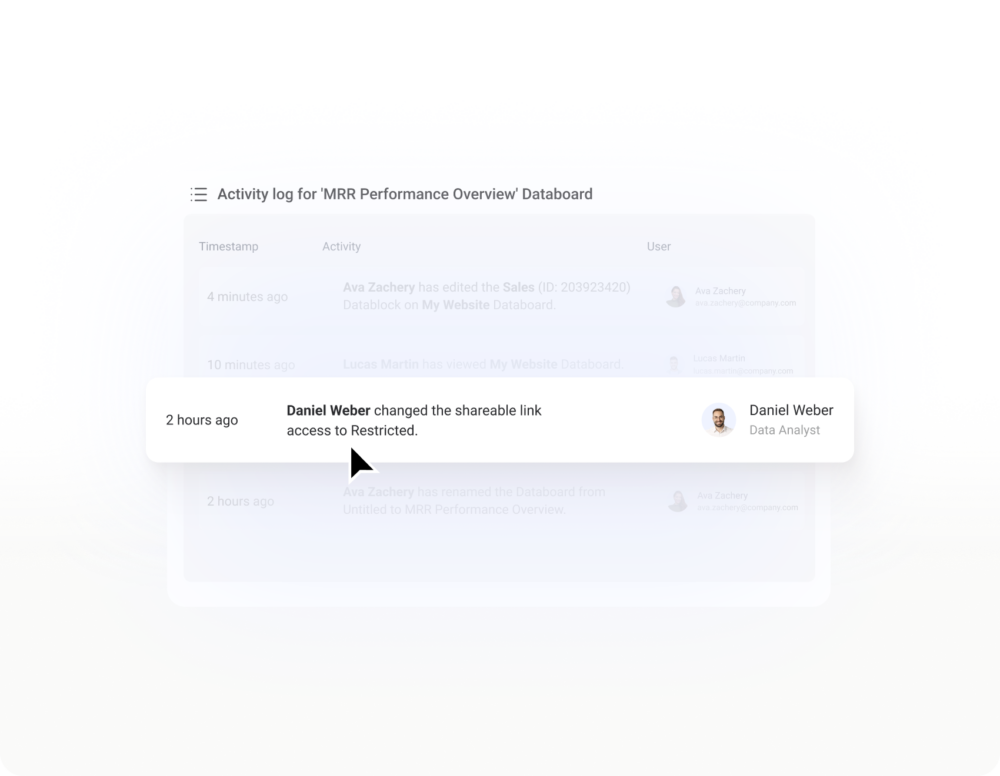
Activity log
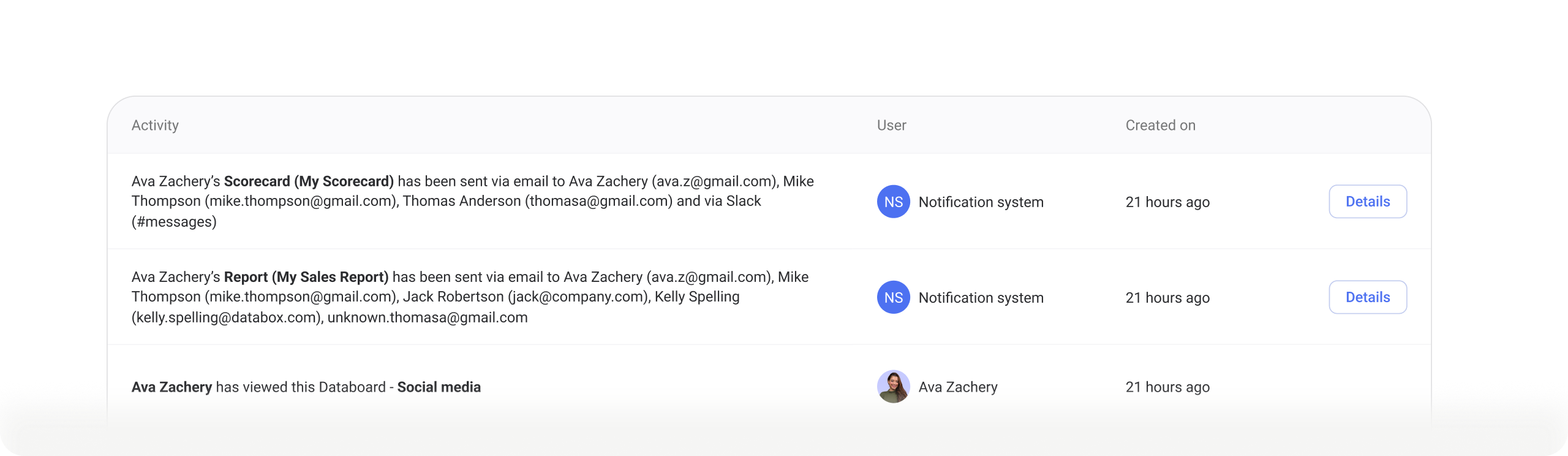
See what changed, who changed it, and when, so you can investigate unexpected activity without piecing together what happened.
Lineage
Trace any metric back to its source and forward to every dashboard it feeds, so you know what a change will affect before you make it.
Unlock more of your data
Give your AI Analyst data you trust
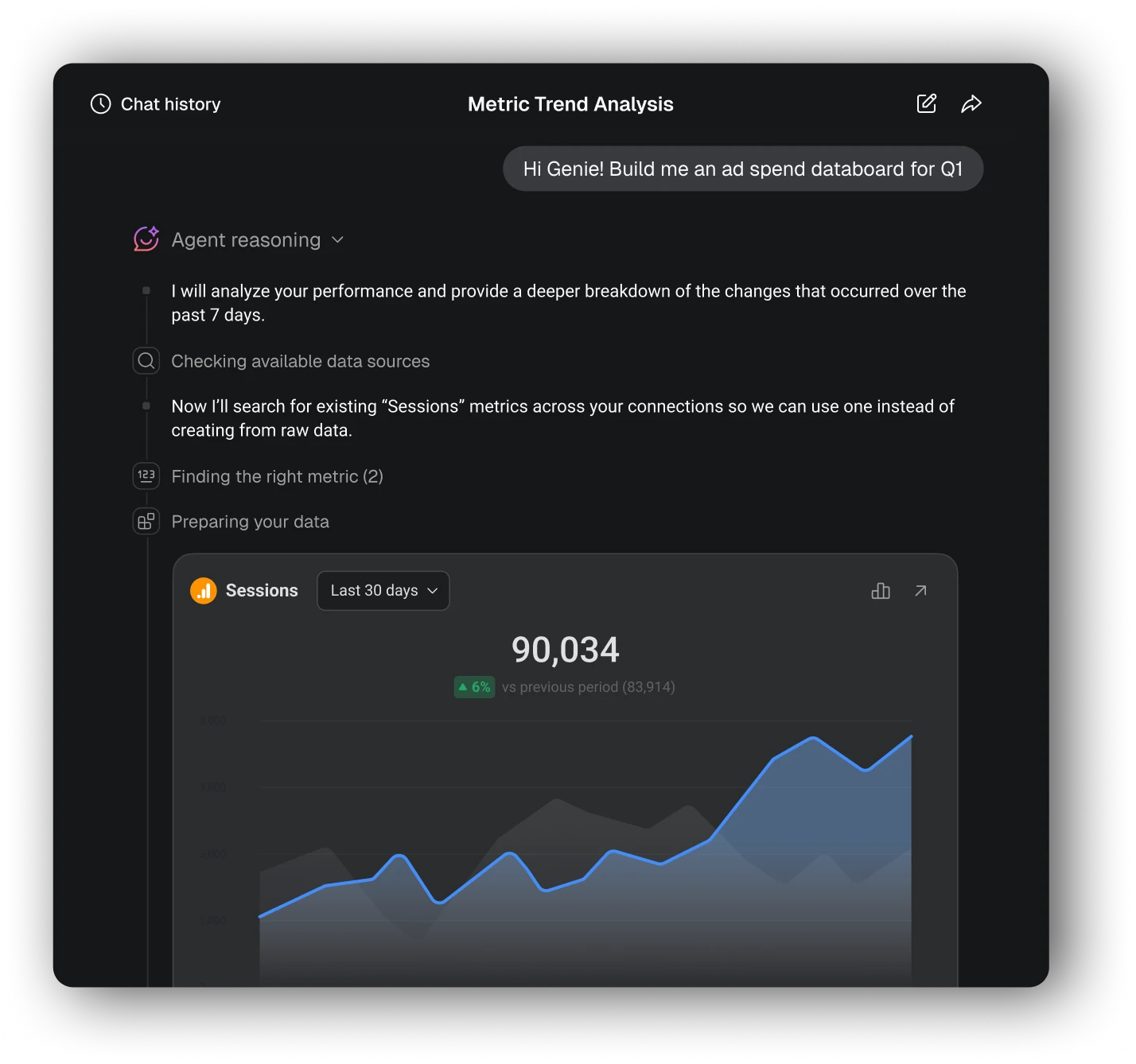
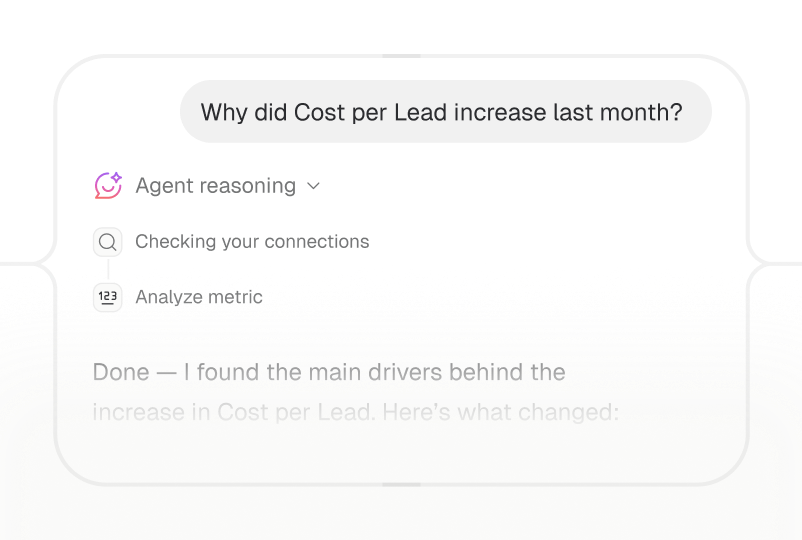
Databox AI Analyst works from your verified data and follows the same permissions as the person asking. The result is more reliable answers without exposing data that should stay private.
Verified answers
AI Analyst prioritizes verified assets, so it's answers are grounded in data your team has approved.
Permission-aware access
Every user gets answers based only on the data they're allowed to see.
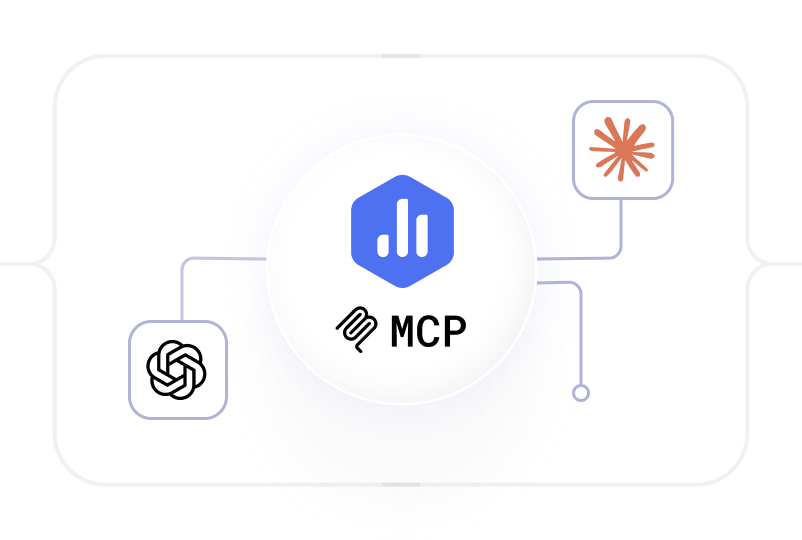
Governed data through MCP
Bring the same verified data and permissions into Claude, ChatGPT, and other AI tools through MCP.
Semantic layer
Make trusted data easier to understand
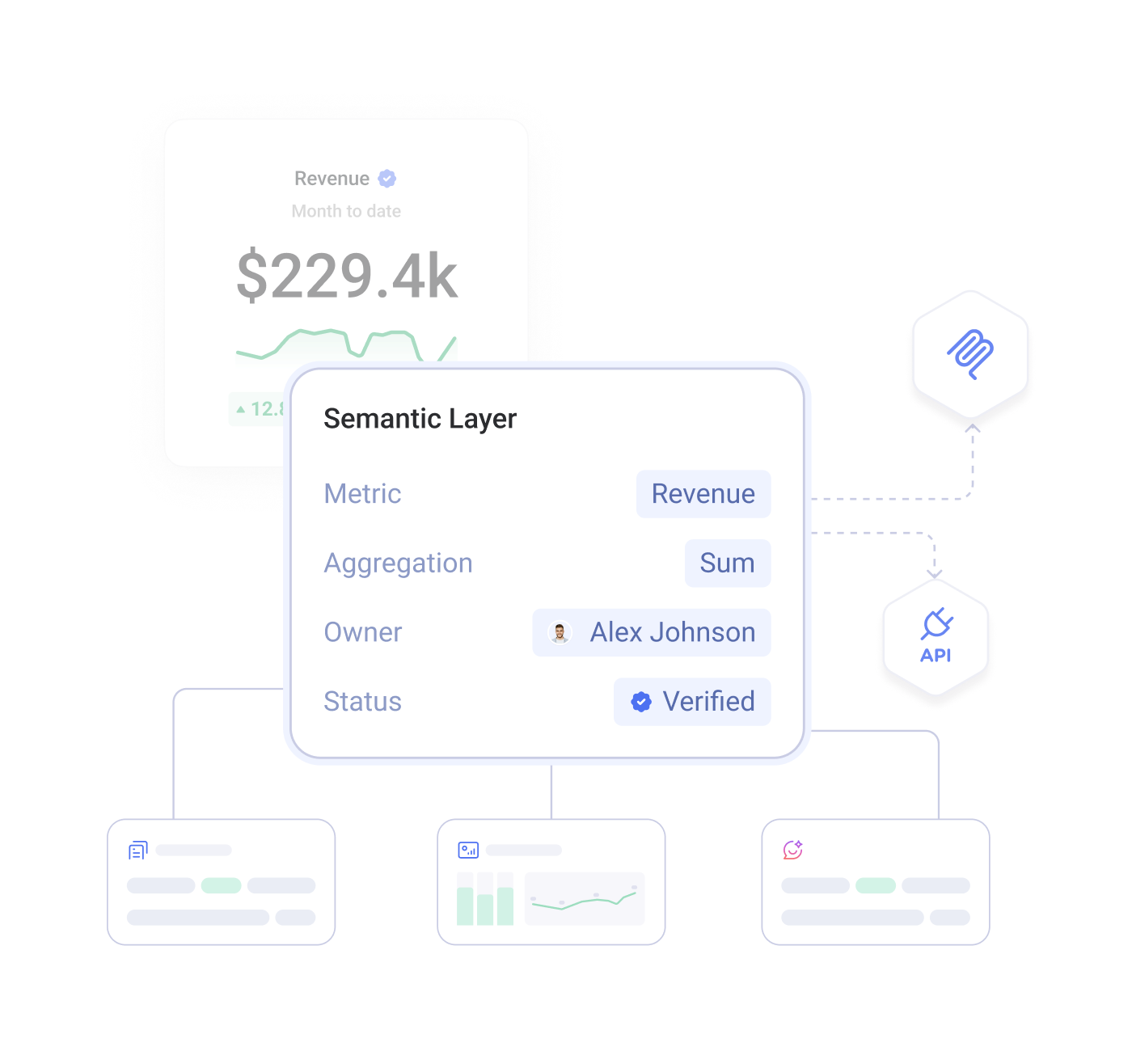
Give people and AI the context they need to find, understand, and use your data correctly. Define what your data means, connect the language your team uses, and standardize how metrics are calculated.
Definitions
Add clear descriptions so people and AI understand what your data means and how to use it.
Synonyms
Connect the different terms your team uses, so the right data can be found no matter how someone asks.
Metrics and calculations
Build metrics from your data or other metrics, and keep calculation logic consistent across reporting and analysis.
- GDPRcompliant
-
 SOC 2certified
Enterprise security, built in
Your data stays encrypted and access-controlled from the moment you connect it. Databox supports your security and compliance requirements with SOC 2 controls and GDPR-aligned data practices.

Get started for free
Give every metric a clear owner, verified status, and complete history, so your team and AI Analyst work from data you trust.
Do more with governed data
Connect your data, analyze it with AI, or bring it into the tools where your team already works.
Learn more
Frequently asked questions
What is AI data governance?
AI data governance is the set of practices that keep the data feeding an AI system accurate, owned, and access-controlled, so its answers can be trusted. In Databox, every metric, dashboard, and dataset can be verified, assigned an owner, and access-controlled, and your AI Analyst prioritizes that verified data when answering questions.
What is Data Governance in Databox?
Data Governance covers Verification, Roles and Permissions, Ownership, Lineage, and the Activity Log, so you can mark which assets are official, control who has access to what, see who owns each one, and track every change.
How is this different from governance in a standalone semantic layer like dbt or Cube?
A standalone semantic layer lives in your data stack and is maintained by data engineers. Databox keeps governance in the same workspace as your Databoards, Reports, and AI tools, so the people accountable for each metric can own its definition where the dashboards live. There’s no separate stack to maintain and no data engineering team required to mark an asset official or change who can use it.
Do I need a data engineer to set up Semantic Metadata or Verification?
No. Anyone with edit rights on an asset can verify it, and Semantic Metadata is configured through a panel on the dataset or column, not through code. The people who own each metric in practice can govern it directly.
How does data governance and semantics change the answers Genie, the AI Analyst, gives my team?
Genie prioritizes verified assets when generating answers and reads Semantic Metadata to interpret your questions correctly. A question about “MRR” returns the same answer as one about “monthly recurring revenue” if you’ve set those as synonyms, and Genie will draw from the official version of a metric instead of a shadow one when both exist.
Does this also apply to AI tools outside Databox, like Claude or ChatGPT?
Yes, through Databox MCP. MCP brings your Databox data into other AI tools your team uses, and those tools read from the same governed layer Genie does. The verified, defined, owned version of a metric is the version those AI tools see.
Is Databox a full enterprise data governance platform?
No, not in the classic sense of policy management, data catalogs, or PII and retention controls. Databox’s governance is scoped to your performance metrics, dashboards, reports, datasets, and AI answers, giving them a verified owner, controlled access, and a change history, so you know which numbers to trust.